
You’ve probably had the thought already—what if getting help makes me someone I don’t recognize?
Not worse. Just… flatter. Quieter. Less you.
That fear doesn’t come out of nowhere. It usually shows up after you’ve already built a life, a personality, a way of moving through the world that—at least on the surface—works.
At structured daytime care that fits your life, we meet people in that exact moment. Not at rock bottom. Not ready to disappear from their lives. Just standing at a quiet crossroads, wondering what help might cost them.
The Fear Isn’t About Treatment—It’s About Identity
For a lot of people, this isn’t just about stopping something.
It’s about what that thing has been doing for you.
Maybe it helps you feel more expressive.
Maybe it softens social anxiety.
Maybe it gives you a sense of control when everything else feels unpredictable.
Or maybe it’s simply become part of your rhythm—how you unwind, how you connect, how you get through the day.
So when someone suggests getting help, your brain doesn’t just hear “change your habits.”
It hears: “Give up the version of you that knows how to function.”
That’s a big ask.
And it’s okay that part of you hesitates.
You Don’t Have to Disappear to Get Better
There’s a common image of treatment that feels extreme—like stepping out of your life entirely, putting everything on hold, and coming back as a completely different person.
That’s not what structured daytime care is designed to do.
Most people don’t lose themselves in the process of getting support.
They start noticing the parts of themselves that were buried under stress, overwhelm, or constant coping.
You might find:
- Your creativity isn’t gone—it’s just more consistent
- Your personality doesn’t flatten—it becomes more grounded
- Your relationships feel less forced and more real
It’s less about becoming someone new and more about finally having enough clarity and energy to be who you already are.
What Your Days Can Actually Look Like
This is where a lot of the uncertainty lives.
People often ask questions like how long is PHP, or whether it means putting their entire life on pause.
The reality is more nuanced—and often more manageable—than expected.
Structured daytime care typically involves several hours of support during the day, multiple days per week. But you still go home at night. You stay connected to your environment, your people, and your responsibilities.
Depending on your situation, that might mean:
- Adjusting your work schedule rather than quitting
- Staying present for your family in the evenings
- Keeping parts of your normal routine intact
It’s not about removing you from your life. It’s about giving you more support within it.
And for many people, that balance makes the idea of getting help feel possible for the first time.
You Might Be Holding It Together More Than You Realize
From the outside, things might look fine.
You show up. You meet expectations. You get through the day.
But internally, it might feel like everything takes more effort than it should.
Signs You Might Be Carrying More Than You Let On:
- You feel “on” all the time but exhausted underneath
- You rely on certain habits just to feel normal or social
- You’ve thought about getting help but keep pushing it off
- You worry that slowing down will make everything fall apart
- You feel disconnected from yourself, even when things look okay
None of this means something is wrong with you.
It usually means you’ve been adapting for a long time without enough support.
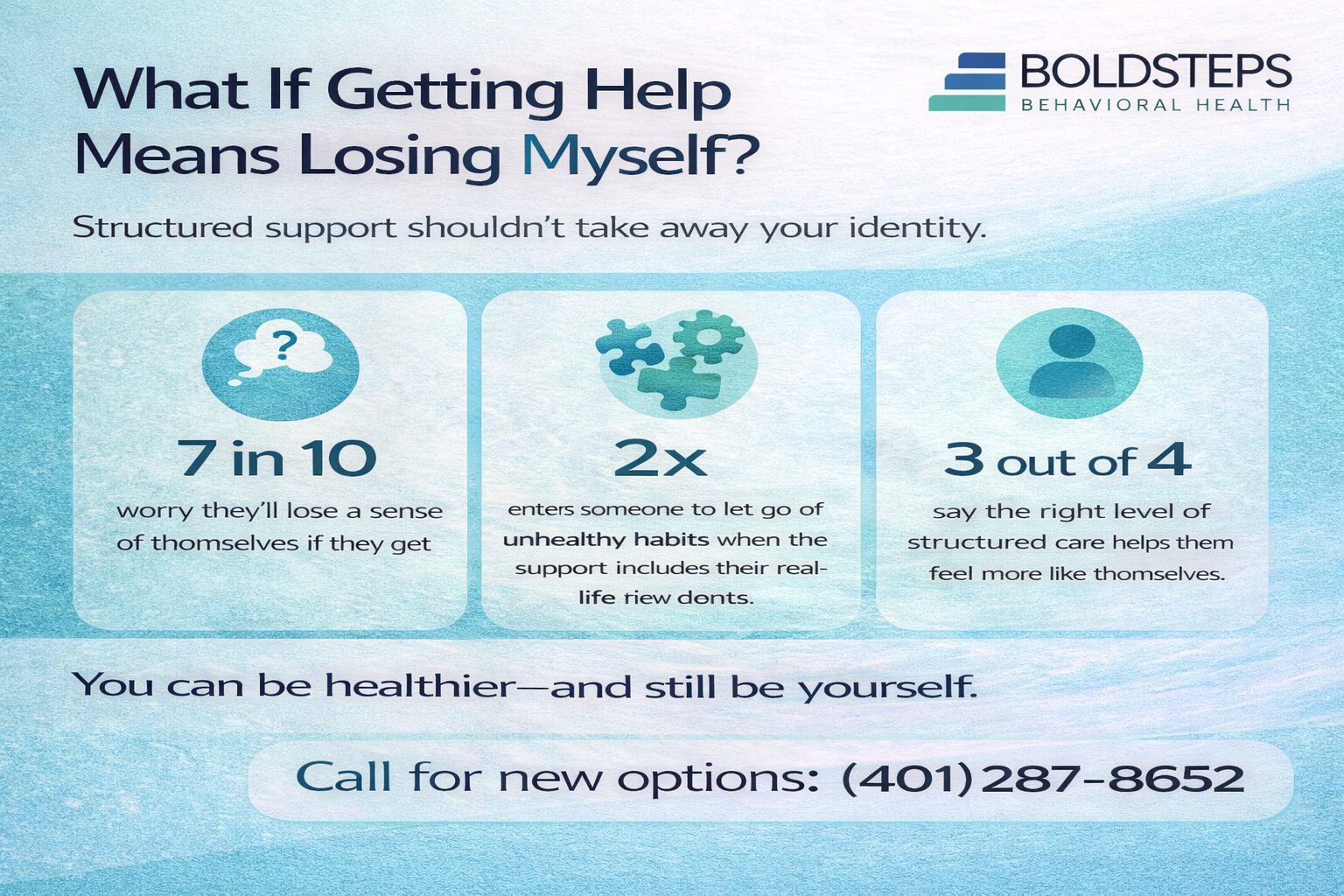
You’re Allowed to Want Both: Help and Yourself
There’s a quiet, unspoken pressure that shows up in conversations about recovery.
It says you have to choose.
Be stable or be interesting.
Be healthy or be creative.
Be okay or be yourself.
That’s not how this works.
You’re allowed to want support without sacrificing your identity.
In fact, the goal of care isn’t to strip anything away that makes you you. It’s to remove what’s been interfering with your ability to fully access it.
Think of it less like losing something—and more like adjusting the volume so you can finally hear yourself clearly.
The Work Isn’t About Changing You—It’s About Supporting You
Inside a structured program, you’re not being reshaped into a certain type of person.
You’re being given space to understand:
- What actually helps you function
- What patterns are draining you
- What support feels sustainable for your life
There’s room for your personality. Your preferences. Your pace.
Some people come in worried they’ll be told who to be.
What they find instead is a place where they can finally figure that out for themselves—with guidance, not pressure.
You Don’t Have to Have It All Figured Out
One of the biggest barriers to getting help is the idea that you need to be ready.
Ready to change everything.
Ready to commit fully.
Ready to let go of what’s familiar.
But most people don’t start there.
They start with a question.
A conversation.
A quiet admission that something isn’t working the way it used to.
That’s enough.
You don’t need certainty to take a first step. You just need a little bit of willingness to explore what support could look like.
FAQ: What People Usually Want to Know Before Reaching Out
Can I keep working while getting this kind of support?
In many cases, yes. Structured daytime care is designed to allow some flexibility. Some people adjust their hours or work part-time while attending. It depends on your schedule and what level of support you need.
How much time does it take each week?
Programs typically run several hours a day, multiple days a week. If you’ve been wondering how long is PHP, the answer varies—but it’s meant to provide consistent support without requiring you to live onsite.
Will I feel like a completely different person?
Most people don’t feel like someone new. They feel more stable, more clear, and more in control of their thoughts and emotions. The goal isn’t to change your identity—it’s to support it.
What if I’m not “bad enough” for this level of care?
You don’t have to hit a breaking point to deserve support. Many people enter structured care because they’re tired of holding everything together alone—not because everything has fallen apart.
What happens during the day?
Days are typically structured with a mix of individual support, group sessions, and time to reflect or practice new skills. It’s active, supportive, and designed to help you apply what you’re learning to real life.
What if I try it and it doesn’t feel right?
That’s okay. Getting help isn’t about locking yourself into something permanent. It’s about exploring what works for you. You’re allowed to ask questions, adjust, and find the right fit.
You’re Still You—Just With More Support
If part of you is afraid that getting help means losing yourself, that part deserves to be heard.
It’s trying to protect something important.
But what if support didn’t take anything away?
What if it gave you more access to the parts of you that feel buried, tired, or stretched thin?
You don’t have to disappear to feel better.
You don’t have to trade your identity for stability.
You can have both.
Call (401) 287-8652 or visit our partial hospitalization program Rhode island services to learn more about what support can look like—on your terms.