
A conversation I have with long-term alumni often starts with a confession.
Not about substances.
Not about relapse.
About exhaustion.
They lower their voice a little and say something like:
“I thought I’d feel better by now.”
At first, they’re hesitant to admit it. After all, they have worked hard to get where they are. Some have been sober for years. They’ve rebuilt relationships. They have careers, families, responsibilities, and routines.
From the outside, life appears stable.
But inside, something still feels unsettled.
Their mind keeps scanning for problems. Their body struggles to relax. They find themselves tense for reasons they can’t fully explain.
And then comes the question many people are almost afraid to ask:
“Why do I still feel this way?”
If you’ve been wondering the same thing, I want you to know something important.
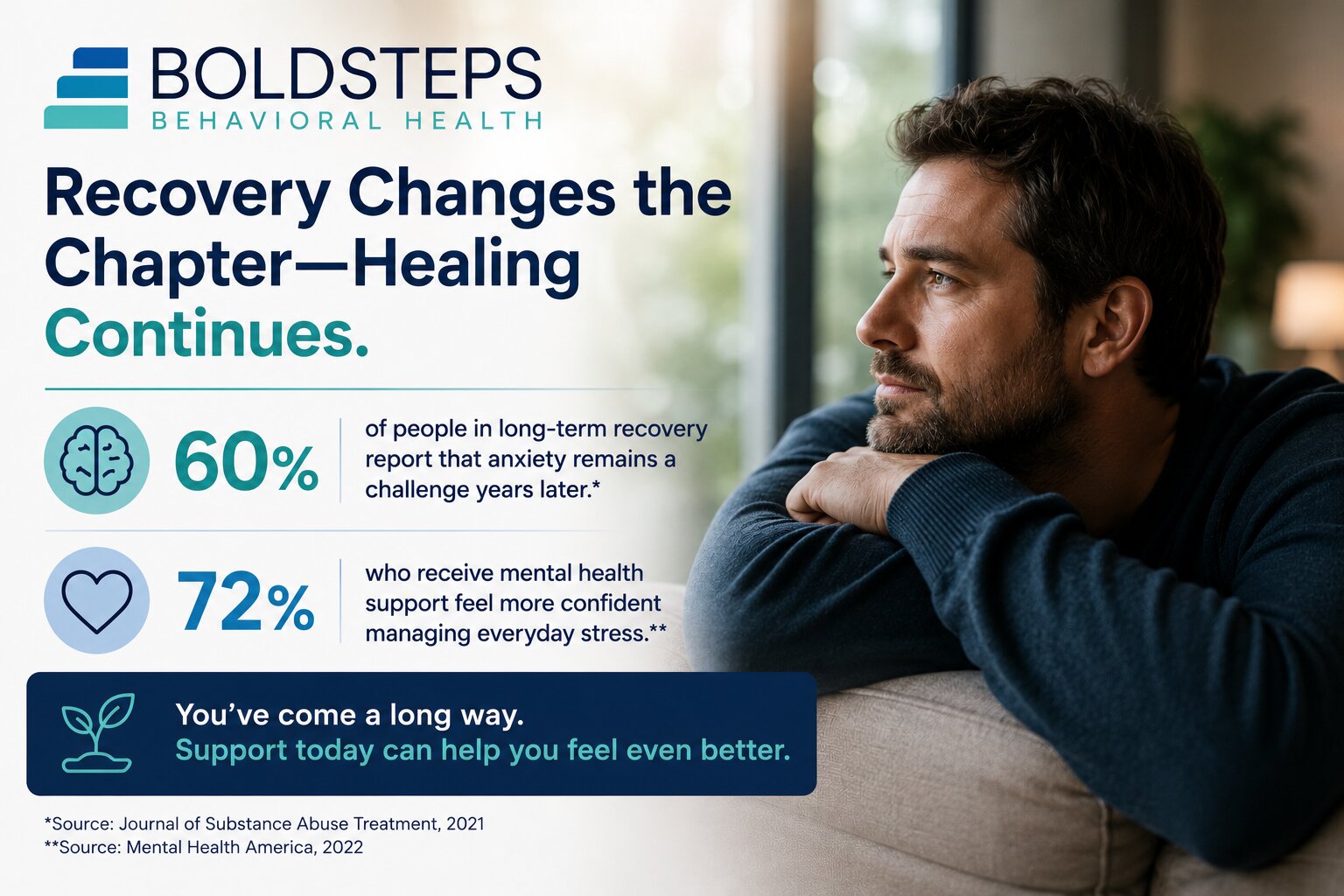
The presence of anxiety years into recovery does not mean recovery isn’t working.
In fact, for many people, it signals that another layer of healing deserves attention.
If anxiety has begun affecting your quality of life, learning more about anxiety support and treatment may provide clarity about what you’re experiencing and what options are available.
The Recovery Milestone Nobody Prepares You For
Recovery conversations often focus on the beginning.
The first thirty days.
The first ninety days.
The first year.
People celebrate those milestones because they’re meaningful. They represent hard work, courage, and change.
But fewer people talk about what happens after the applause fades.
What happens when you’ve already achieved what once seemed impossible?
What happens when life becomes relatively normal again?
Many alumni discover that once the immediate crisis ends, other challenges begin to surface.
Old fears that were buried under chaos suddenly become easier to hear.
Unresolved stress becomes more noticeable.
Questions about identity, purpose, and emotional well-being move into the spotlight.
This can feel confusing because life is objectively better.
Yet emotionally, something still feels unfinished.
Your Brain Learned Survival Before It Learned Safety
One of the most important things I explain to long-term alumni is this:
Recovery changes many things, but it doesn’t instantly retrain a nervous system that spent years operating in survival mode.
For some people, anxiety existed long before substance use began.
For others, substance use became a way to manage uncomfortable emotions, stress, or fear.
Either way, the brain adapts.
Over time, it becomes highly skilled at anticipating threats.
The challenge is that your nervous system doesn’t always receive the memo when circumstances improve.
Years later, you may still find yourself:
- Expecting the worst
- Overanalyzing conversations
- Struggling to relax
- Feeling restless during quiet moments
- Assuming problems are around the corner
Imagine spending years driving through dangerous weather.
Even after the storm ends, your hands may stay tight on the steering wheel.
That’s how many people experience anxiety after recovery.
The danger has passed.
The body still remembers.
Success Can Create New Anxiety
This surprises many people.
They expect anxiety to decrease as life improves.
Sometimes it does.
Sometimes it changes shape.
Early recovery is often focused on survival.
Long-term recovery is often focused on maintenance.
And maintenance can carry its own pressure.
You start worrying about protecting what you’ve built.
You worry about disappointing people.
You worry about making mistakes.
You worry about losing progress.
You worry about becoming the person you used to be.
Suddenly, success itself becomes something you’re trying to protect.
I’ve worked with alumni who described this experience as carrying a glass sculpture everywhere they go.
They’ve built something beautiful.
Now they’re terrified of dropping it.
The result can be chronic tension that never fully switches off.
The Hidden Loneliness of Long-Term Recovery
This is one of the most overlooked experiences among people who have been sober for years.
Early recovery often comes with built-in connection.
Frequent meetings.
Therapy appointments.
Support groups.
Regular accountability.
Conversations about recovery happen often.
Then life moves forward.
Work becomes busy.
Families grow.
Schedules fill up.
Recovery becomes less visible.
While this progress is healthy, it can also create distance from the support systems that once provided stability.
Many alumni don’t realize they’re becoming isolated because they’re still surrounded by people.
But being surrounded by people isn’t always the same as feeling understood.
The result can be a quiet sense of disconnection.
Not severe enough to trigger alarm.
Not obvious enough to discuss.
Yet significant enough to affect emotional well-being.
Sometimes anxiety grows louder in those empty spaces.
When You Can’t Explain Why You’re Uncomfortable
One of the hardest experiences for long-term alumni is anxiety without an obvious cause.
You aren’t facing a crisis.
Your bills are paid.
Your relationships are relatively stable.
Work is manageable.
Yet your body feels tense.
This can create frustration.
You tell yourself you should be grateful.
You remind yourself how far you’ve come.
You compare your current life to previous struggles.
None of it seems to help.
That’s because anxiety isn’t always logical.
Sometimes it’s physical.
Sometimes it’s emotional.
Sometimes it’s connected to old experiences that were never fully processed.
And sometimes it’s the result of carrying stress for so long that your body no longer remembers how to fully relax.
When people describe feeling on edge all the time, they’re often talking about this exact experience.
The sensation exists.
The explanation feels unclear.
The uncertainty itself becomes stressful.
Anxiety Isn’t Always the Problem
This may sound strange coming from a clinician.
But anxiety isn’t always the issue.
Sometimes it’s the signal.
Think about your car’s dashboard.
The warning light isn’t the problem.
It’s information.
Anxiety can function the same way.
It may be pointing toward:
- Burnout
- Chronic stress
- Grief
- Relationship challenges
- Work pressure
- Emotional avoidance
- Unmet needs
- Loss of purpose
Many long-term alumni become experts at managing life.
What they haven’t always learned is how to slow down long enough to hear what their emotions are communicating.
The goal isn’t necessarily to silence anxiety immediately.
The goal is understanding what it may be trying to tell you.
Healing Doesn’t End When Recovery Begins
One of the most harmful myths about recovery is the belief that eventually you’ll arrive at a point where everything feels resolved.
Human beings don’t work that way.
We continue growing.
We continue changing.
We continue encountering new challenges.
The person you are today isn’t the same person you were five years ago.
The coping skills that once served you may need updating.
The support systems that once felt sufficient may need strengthening.
The emotional needs you once ignored may finally be asking for attention.
Seeking help years into recovery isn’t evidence that something has gone wrong.
It’s evidence that you’re continuing to care for yourself.
Many alumni find that returning to therapy, participating in structured mental health support, or reconnecting with recovery-focused communities provides relief they didn’t realize they needed.
For those looking for additional guidance, accessing support in local communities can be an important step toward reconnecting with emotional wellness.
You Don’t Have To Earn Support Through Crisis
This may be the most important thing I can tell you.
Many people wait too long because they believe support is only appropriate during emergencies.
They think:
“It’s not bad enough.”
“I should be able to handle this.”
“Other people have it worse.”
The problem with this mindset is that it treats emotional well-being like a pass-or-fail test.
You don’t need to be falling apart to deserve support.
You don’t need a relapse.
You don’t need a breakdown.
You don’t need a crisis.
If anxiety is making life harder than it needs to be, that’s reason enough to pay attention.
The goal isn’t simply staying sober.
The goal is building a life that actually feels livable.
Recovery Is About More Than Survival
Long-term recovery isn’t supposed to feel like white-knuckling your way through every day.
It isn’t supposed to feel like constantly waiting for the next problem.
It isn’t supposed to feel like carrying tension everywhere you go.
Recovery is about freedom.
Freedom to rest.
Freedom to trust yourself.
Freedom to enjoy stability without expecting disaster.
Freedom to feel present in your own life.
If anxiety continues showing up years later, it doesn’t mean you’ve failed.
It may simply mean another chapter of healing is waiting for your attention.
Frequently Asked Questions
Is it normal to experience anxiety years into recovery?
Yes. Many people continue experiencing anxiety long after achieving sobriety. Recovery addresses substance use, but emotional health and nervous system regulation often require ongoing attention and support.
Why do I feel anxious even though my life is going well?
Anxiety isn’t always connected to current circumstances. Past stress, unresolved emotional experiences, chronic worry patterns, and nervous system conditioning can continue affecting how you feel even when life is stable.
Does anxiety mean I’m at risk of relapse?
Not necessarily. However, unmanaged anxiety can increase emotional distress, which is why addressing it early can support long-term recovery and overall well-being.
Can therapy still help if I’ve been sober for years?
Absolutely. Many people benefit from therapy years into recovery because new life stages, responsibilities, and emotional challenges emerge over time.
When should I seek professional help for anxiety?
Consider reaching out if anxiety is affecting sleep, relationships, work performance, concentration, enjoyment of life, or your overall sense of well-being.
Can anxiety appear even if I never had it before recovery?
Yes. Some people discover underlying anxiety after substances are removed because those substances were masking symptoms. Others develop anxiety in response to life changes, stress, or new responsibilities during recovery.
What if I feel guilty asking for help again?
Seeking support isn’t a sign of weakness or failure. It’s a sign that you’re paying attention to your mental health and taking steps to protect the progress you’ve worked hard to achieve.
Call (401) 287-8652 or visit our anxiety services to learn more about our conditions, anxiety services in Rhode Island.