After experiencing or witnessing a traumatic event, it’s common to wonder whether what you’re feeling is a normal response to stress or something more. If you’ve been searching what are the 17 symptoms of PTSD, you’re probably looking for answers—not to diagnose yourself, but to better understand what you’re experiencing. If your symptoms have been affecting your daily life, learning more about PTSD treatment can help you understand what professional support may look like.
The phrase “17 symptoms of PTSD” is widely used online, but there’s an important detail that’s often left out. The DSM-5 PTSD criteria don’t simply present one long checklist. Instead, the symptoms are organized into four clusters of PTSD, which reflect different ways trauma can affect the brain, emotions, relationships, and daily functioning.
Understanding these clusters makes the symptoms easier to recognize—and often easier to talk about with a healthcare professional.
The 17 Symptoms of PTSD, Organized by DSM-5 Cluster
Although people often search for a PTSD symptoms list, mental health professionals evaluate symptoms based on four categories rather than a single list. A diagnosis also depends on how long symptoms have lasted, whether they’re causing significant impairment, and several other clinical criteria.
Cluster B: Intrusion Symptoms (5 Symptoms)
Intrusion symptoms occur when traumatic memories continue breaking into everyday life, often without warning.
1. Recurrent, Unwanted Memories
Memories of the traumatic event repeatedly enter your mind, even when you don’t want to think about it. These aren’t ordinary memories—they often feel vivid, emotionally intense, and difficult to stop.
2. Distressing Dreams or Nightmares
Dreams related to the trauma may replay parts of the event or capture the same emotions, even if the exact details differ.
3. Flashbacks
A flashback can make it feel as though the traumatic event is happening again. During severe episodes, people may temporarily lose awareness of their present surroundings.
4. Intense Emotional Distress at Reminders
Certain sounds, smells, locations, anniversaries, conversations, or news stories may trigger overwhelming fear, sadness, panic, or emotional pain.
5. Physical Reactions to Trauma Reminders
The body may react before the mind fully understands what’s happening. Symptoms can include:
- Rapid heartbeat
- Sweating
- Trembling
- Shortness of breath
- Nausea
- Muscle tension
Cluster C: Avoidance Symptoms (2 Symptoms)
Avoidance often develops because the brain is trying to prevent additional emotional pain.
6. Avoiding Thoughts or Feelings About the Trauma
Some people immediately push away memories whenever they surface or refuse to think about what happened.
7. Avoiding External Reminders
People may avoid:
- Certain places
- People connected to the trauma
- Activities
- Conversations
- Movies, music, or news
- Driving or traveling specific routes
Avoidance can temporarily reduce anxiety but often allows PTSD symptoms to continue over time.
Cluster D: Negative Changes in Thoughts and Mood (7 Symptoms)
Trauma can change how someone views themselves, other people, and the world around them.
8. Difficulty Remembering Important Parts of the Trauma
Some individuals cannot recall significant details of what happened despite remembering other parts clearly.
9. Persistent Negative Beliefs
Examples include thoughts such as:
- “I’m broken.”
- “No one can be trusted.”
- “The world is dangerous.”
- “Nothing will ever get better.”
These beliefs often feel like facts rather than opinions.
10. Persistent Self-Blame or Blaming Others
Many people believe they should have prevented the trauma or hold themselves responsible for events outside their control.
11. Ongoing Negative Emotional States
Common emotions include:
- Fear
- Shame
- Guilt
- Anger
- Sadness
- Hopelessness
These feelings may remain present long after the traumatic event has ended.
12. Loss of Interest in Activities
Hobbies, friendships, work, or favorite activities may no longer feel enjoyable or meaningful.
13. Feeling Detached from Other People
People with PTSD may feel emotionally distant from family or friends, even while wanting close relationships.
14. Difficulty Experiencing Positive Emotions
Some individuals describe feeling emotionally “numb,” unable to experience happiness, excitement, love, or contentment the way they once did.
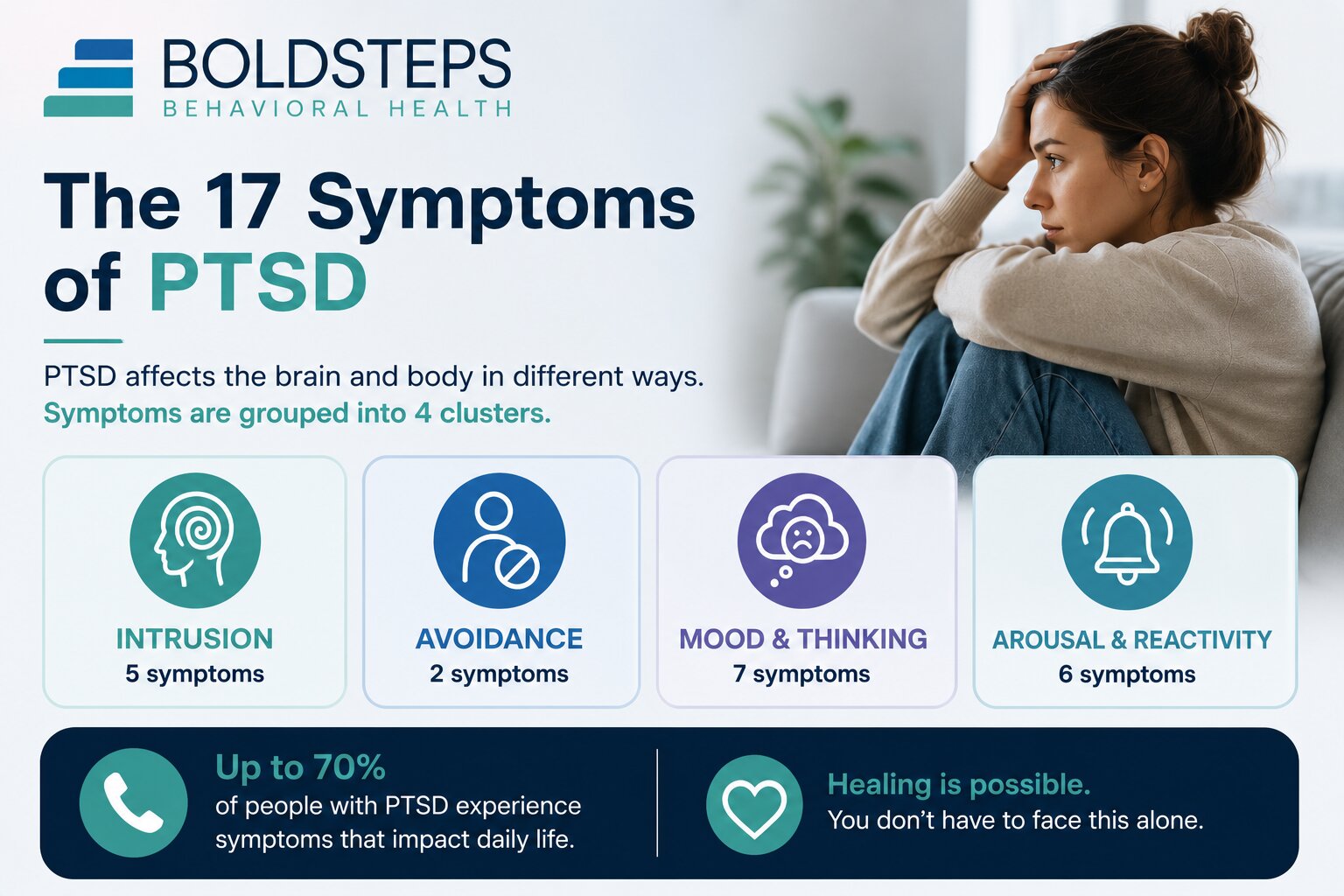
Cluster E: Changes in Arousal and Reactivity (6 Symptoms)
These symptoms reflect a nervous system that remains on high alert long after danger has passed.
15. Irritability or Angry Outbursts
Small frustrations may trigger reactions that seem much stronger than the situation calls for.
16. Reckless or Self-Destructive Behavior
Some people engage in behaviors that increase risk, sometimes as a way to cope with overwhelming emotions.
17. Hypervigilance
Feeling constantly alert for danger, even in objectively safe environments.
18. Exaggerated Startle Response
Unexpected sounds or movements can produce unusually intense reactions.
19. Difficulty Concentrating
Maintaining attention at work, school, or during conversations becomes challenging.
20. Sleep Disturbances
Difficulty falling asleep, staying asleep, or experiencing restful sleep is extremely common with PTSD.
Accuracy note: Many websites refer to the “17 symptoms of PTSD” because earlier diagnostic criteria were commonly summarized that way. The current DSM-5 organizes PTSD into 20 individual symptoms across four clusters, while diagnosis depends on meeting specific criteria within each cluster—not simply counting symptoms.
What Each Cluster Feels Like Day to Day
Reading a symptom list is one thing. Living with PTSD often feels very different than the clinical descriptions suggest.
Intrusion Can Interrupt Ordinary Moments
You may be driving to work when a familiar intersection suddenly brings back vivid memories. A smell, a song, or even the time of year may trigger emotions that seem to appear out of nowhere.
It isn’t simply “thinking about the past.” It can feel as though your body reacts before your mind understands why.
Avoidance Can Quietly Shrink Your World
Avoidance rarely begins with major life changes.
Instead, it often starts with small decisions.
You skip one gathering because someone who reminds you of the trauma might be there. You avoid one neighborhood. You change the television channel when certain topics appear.
Over time, those choices can gradually make life feel smaller without you realizing it.
Changes in Mood and Thinking Can Affect Relationships
Someone asks how you’re doing, and you automatically say you’re fine—even when you don’t believe it yourself.
Conversations become harder because you’re emotionally distant or constantly criticizing yourself internally.
People may think you’ve become withdrawn when, in reality, you’re working incredibly hard simply to get through each day.
Arousal Symptoms Can Make Everyday Life Exhausting
At work, you may constantly scan the room without realizing it.
A slammed door makes your heart race.
Concentrating on simple tasks feels impossible because part of your brain never fully relaxes.
Even when nothing dangerous is happening, your nervous system may continue acting as though it needs to protect you.
When It’s PTSD vs. Normal Stress
Experiencing trauma doesn’t automatically mean someone develops PTSD.
Many people experience temporary stress reactions after frightening or overwhelming events.
Healthcare professionals consider several important factors when evaluating PTSD:
- Symptoms continue for more than one month
- Symptoms cause significant distress or interfere with work, relationships, or daily life
- Symptoms cannot be better explained by another medical condition or substance use
- The pattern of symptoms matches the DSM-5 PTSD criteria
Because many mental health conditions can share similar symptoms, only a qualified mental health professional can determine whether PTSD or another condition best explains what someone is experiencing.
If you’re recognizing several of these experiences in yourself, it doesn’t necessarily mean you have PTSD—but it may be worth speaking with a licensed clinician.
Getting Help for PTSD
Many people worry that seeking help means they’ll immediately be prescribed medication or have to relive every painful memory.
Neither is necessarily true.
PTSD is often treated using evidence-based therapies designed to help the brain process trauma more effectively, including:
- Cognitive Processing Therapy (CPT)
- Eye Movement Desensitization and Reprocessing (EMDR)
- Prolonged Exposure (PE)
Treatment is individualized, and medication is only one possible option, not a requirement for everyone. At Bold Steps Rhode Island, our trauma therapy program combines evidence-based approaches with individualized support to help people manage trauma-related symptoms and work toward recovery.
Perhaps most importantly, PTSD is treatable. Many people experience meaningful improvement with the right support and enough time.
If trauma symptoms have been affecting your relationships, work, sleep, or overall well-being, you don’t have to manage them alone. Learn more about PTSD treatment at Bold Steps RI or call (401) 287-8652 to speak with someone about your options.
Frequently Asked Questions
What are the 17 symptoms of PTSD?
The phrase “17 symptoms of PTSD” is commonly used online, but the current DSM-5 organizes PTSD into 20 symptoms across four clusters: intrusion, avoidance, negative changes in thoughts and mood, and changes in arousal and reactivity. Diagnosis depends on meeting specific criteria within these clusters rather than simply counting symptoms.
How many PTSD symptoms do you need for a diagnosis?
A PTSD diagnosis is based on meeting specific DSM-5 criteria across all four symptom clusters, along with requirements related to symptom duration, functional impairment, and exposure to trauma. A licensed mental health professional performs this evaluation.
What is the difference between PTSD and normal stress?
Stress reactions after a traumatic event are common and often improve with time. PTSD involves symptoms that persist for more than one month, significantly interfere with daily life, and fit a specific pattern outlined in the DSM-5. If symptoms continue or worsen, a professional evaluation can help determine the most appropriate next steps.