
If you drink heavily or regularly, deciding to stop can be an important step—but it may not be safe to take that step alone. Understanding the alcohol withdrawal timeline can help you recognize what may happen after the last drink and why medical support matters. Learning about alcohol addiction treatment can also help you prepare for withdrawal and the recovery process that follows.
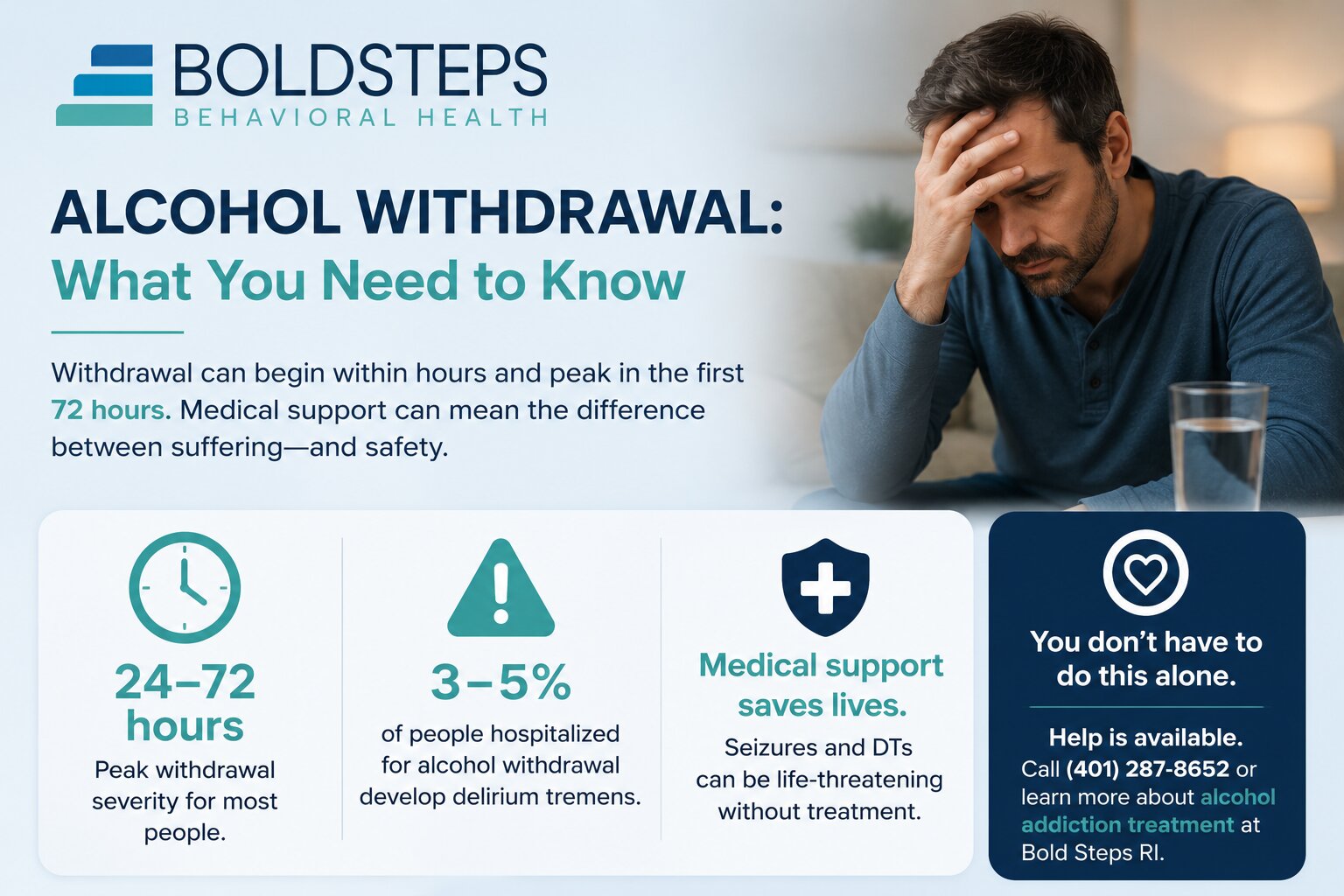
Alcohol withdrawal is one of the few drug withdrawal syndromes that can become life-threatening. Symptoms may begin within hours, then intensify over the next several days. In severe cases, withdrawal can cause seizures, hallucinations, dangerous changes in heart rate or blood pressure, and delirium tremens.
Not everyone develops severe withdrawal. However, there is no reliable way to predict the course based only on how someone feels during the first few hours. A person may initially have mild shaking or anxiety and still experience a serious complication later.
Call 911 or seek emergency medical care immediately if someone experiences a seizure, severe confusion, hallucinations, fever, extreme agitation, difficulty staying conscious, chest pain, trouble breathing, or an irregular heartbeat during alcohol withdrawal.
Alcohol Withdrawal Timeline: Hours to Days
The exact alcohol detox timeline varies from person to person. How much someone drinks, how frequently they drink, how long the pattern has continued, and whether they have experienced withdrawal before can all affect severity.
The following table describes a typical timeline. It should not be used to decide whether detoxing at home is safe.
Time Since the Last Drink |
What May Happen |
|---|---|
| 6–12 hours | Early symptoms may begin, including anxiety, sweating, hand tremors, headache, nausea, restlessness, insomnia, rapid heart rate, and elevated blood pressure. |
| 12–24 hours | Early symptoms may intensify. Some people experience visual, auditory, or tactile hallucinations while remaining aware of where they are and what is happening. |
| 24–48 hours | Withdrawal severity may peak. This is a major risk window for alcohol withdrawal seizures, although seizures may occur earlier. |
| 48–72 hours | Some symptoms begin improving, but people at risk for severe withdrawal may develop delirium tremens during this period. |
| 72–96 hours | Delirium tremens can still begin or intensify. Continued medical monitoring may be necessary for people with significant risk factors. |
| Days 5–7 | Acute symptoms improve for many people who do not develop complications, although sleep problems, anxiety, fatigue, and mood changes may continue. |
| Following weeks or longer | Some people experience lingering insomnia, anxiety, irritability, difficulty concentrating, cravings, or mood instability after the acute withdrawal period. |
These time ranges are estimates rather than guarantees. Alcohol withdrawal seizures have been reported as early as approximately six hours after the last drink, with most occurring within the first 48 hours. Delirium tremens often develops around 48 to 72 hours after alcohol use stops, but onset may occur later. (MSD Manuals)
The First 6–12 Hours
Early alcohol withdrawal symptoms can resemble intense anxiety, a severe hangover, or both.
A person may notice:
- Shaking hands
- Sweating
- Headache
- Nausea or vomiting
- Anxiety or irritability
- Restlessness
- Difficulty sleeping
- Rapid heartbeat
- Increased blood pressure
- Sensitivity to light or sound
These symptoms can be deeply uncomfortable, but the greater concern is what may happen next. Feeling relatively stable during the first several hours does not mean the entire withdrawal period will remain mild.
Hours 12–24
During the next stage, tremors, anxiety, nausea, sweating, and insomnia may become more intense.
Some people also develop alcohol withdrawal hallucinations. They may see shapes, insects, shadows, or people who are not present. Others hear voices or sounds or feel sensations such as bugs crawling on their skin.
Hallucinations during withdrawal require prompt medical evaluation. They may occur without the severe confusion associated with delirium tremens, but they can still indicate significant withdrawal.
Hours 24–72: The Critical Window
The first three days are often the most medically concerning period.
Alcohol withdrawal seizures are most likely during the first 24 to 48 hours. Delirium tremens commonly begins later, often between 48 and 72 hours, although it may start as late as 96 hours or beyond.
Someone who appears uncomfortable but alert one day may become severely ill the next. That is one reason medical professionals consider a person’s history and risk factors—not just their current symptoms—when determining the right level of care.
Days 5–7
For many people who do not develop seizures or delirium tremens, acute symptoms begin resolving within several days.
Tremors, sweating, nausea, and cardiovascular symptoms may improve. Sleep and mood may take longer to stabilize.
Some people continue to experience:
- Anxiety
- Fatigue
- Irritability
- Depression
- Poor concentration
- Sleep disruption
- Alcohol cravings
The answer to how long does alcohol withdrawal last therefore depends on what is being measured. The most intense physical symptoms often improve within five to seven days, but emotional, cognitive, and sleep-related symptoms may continue longer.
The Following Weeks
Some people experience prolonged or post-acute withdrawal symptoms after the initial detox period.
These may include:
- Difficulty sleeping
- Unpredictable mood changes
- Persistent anxiety
- Low motivation
- Trouble concentrating
- Sensitivity to stress
- Strong cravings
These symptoms can be discouraging, especially when someone expected to feel completely better once alcohol left their system. They do not mean recovery is failing. The nervous system may need time to adjust, and continuing treatment can help someone manage symptoms without returning to alcohol.
Mild vs. Severe Alcohol Withdrawal Symptoms
Alcohol withdrawal exists on a spectrum. Some people experience mild discomfort, while others develop a medical emergency.
Mild to Moderate Symptoms
Mild or moderate withdrawal may include:
- Hand tremors
- Sweating
- Anxiety
- Irritability
- Headache
- Nausea or vomiting
- Loss of appetite
- Restlessness
- Insomnia
- Elevated heart rate
- Increased blood pressure
Even symptoms that appear mild deserve attention when someone has been drinking heavily or has a history of complicated withdrawal.
Severe Symptoms
Severe withdrawal may involve:
- Generalized seizures
- Visual, auditory, or tactile hallucinations
- Severe agitation
- Confusion or disorientation
- High fever
- Dangerous changes in heart rate
- Significant blood pressure instability
- Delirium tremens
Not everyone progresses from mild symptoms to severe symptoms. However, severe complications can sometimes develop quickly and with limited warning.
Alcohol Withdrawal Seizures and Delirium Tremens
The two most dangerous complications are alcohol withdrawal seizures and delirium tremens. Both require urgent medical intervention.
Alcohol Withdrawal Seizures
Withdrawal seizures are usually generalized tonic-clonic seizures. A person may suddenly lose consciousness, become rigid, experience rhythmic jerking movements, and have difficulty breathing normally during the event.
They often occur within 24 to 48 hours after the last drink, although the possible window begins earlier. A seizure may happen even when other withdrawal symptoms have not appeared especially severe. (NCBI)
A withdrawal seizure is a medical emergency because:
- More seizures may follow.
- The person may fall or sustain a head injury.
- Breathing may be impaired.
- The seizure may last longer than expected.
- It may signal progression toward more severe withdrawal.
Do not restrain someone who is having a seizure or put anything in their mouth. Move nearby objects away, protect their head if possible, turn them onto their side when it is safe to do so, and call 911.
A person should still receive emergency care even if the seizure stops quickly and they appear to recover.
Delirium Tremens
Delirium tremens, commonly called DTs, is the most severe form of alcohol withdrawal. Estimates vary by population, but roughly 3% to 5% of people hospitalized with alcohol withdrawal may develop it. (NCBI)
The delirium tremens timeline usually begins around 48 to 72 hours after the last drink. In some cases, onset occurs between 72 and 96 hours or later.
Symptoms may include:
- Severe confusion
- Disorientation
- Extreme agitation
- Hallucinations
- Profuse sweating
- High fever
- Rapid heart rate
- Dangerous blood pressure changes
- Tremors
- Severe sleep disruption
- Changes in consciousness
Delirium is more than anxiety or temporary forgetfulness. Someone may not know where they are, recognize people around them, understand what is happening, or remain consistently aware of their surroundings.
DTs can be fatal without medical intervention. Complications can include cardiac arrhythmias, severe dehydration, electrolyte disturbances, aspiration, respiratory failure, and cardiovascular collapse. Prompt hospital treatment substantially reduces the risk of death. (Merck Manuals)
Never attempt to manage suspected delirium tremens at home. Call 911 immediately.
Risk Factors for Severe Alcohol Withdrawal
It is not always possible to predict exactly who will develop complicated withdrawal, but certain factors increase the risk.
Long-Term, Heavy Alcohol Use
The brain adapts to the continued presence of alcohol. When alcohol is abruptly removed, the nervous system can become excessively active.
In general, the longer and more heavily someone has been drinking, the greater the potential risk. However, drinking amount alone cannot reliably determine whether withdrawal will be safe.
Previous Withdrawal Episodes
A history of alcohol withdrawal is one of the most important warning signs.
Repeated cycles of heavy drinking, stopping, withdrawing, and returning to alcohol may increase the severity of later withdrawal episodes. This process is sometimes called the kindling effect.
Someone whose previous withdrawal was manageable may experience more severe symptoms during a future attempt.
Previous Withdrawal Seizures or DTs
A history of withdrawal seizures or delirium tremens places someone at particularly high risk for recurrence. Medical detox is generally necessary in these cases.
Older Age
Older adults may have less physiological reserve and more medical conditions or medication interactions that complicate withdrawal.
Co-Occurring Medical Conditions
Risk may be greater when someone has:
- Heart disease
- Liver disease
- A seizure disorder
- Respiratory illness
- Electrolyte abnormalities
- A recent head injury
- Infection
- Poor nutrition
Alcohol withdrawal can worsen existing medical conditions, while those conditions can make withdrawal harder to treat.
Mental Health Conditions
Severe anxiety, depression, psychosis, suicidal thoughts, or other psychiatric symptoms may complicate withdrawal and require a higher level of monitoring.
Use of Other Drugs or Medications
Withdrawal from alcohol may overlap with the effects of sedatives, opioids, stimulants, or prescription medications. This can make symptoms less predictable and may increase the risk of dangerous complications.
Why You Should Never Quit Cold Turkey From Heavy Alcohol Use
A person who is physically dependent on alcohol should not suddenly stop drinking without first receiving medical guidance.
This does not mean someone should continue drinking indefinitely or try to design a taper without professional supervision. It means the safest next step is to contact a medical provider, detoxification center, or emergency department before stopping.
During medical detox, clinicians can:
- Assess the risk of severe withdrawal
- Monitor heart rate, blood pressure, temperature, and mental status
- Use medication to reduce withdrawal severity
- Treat nausea, dehydration, and nutritional deficiencies
- Respond immediately if a seizure or delirium develops
- Determine when a higher level of hospital care is needed
Benzodiazepines are commonly considered first-line medications for preventing or treating severe alcohol withdrawal. Some hospitals and detox programs use phenobarbital in selected patients or according to facility-specific protocols. Medication selection and dosing require clinical assessment because oversedation, breathing problems, liver impairment, medication interactions, and other complications must be considered. ASAM recommends benzodiazepines as first-line treatment for patients at risk of severe or complicated withdrawal, while phenobarbital may be used by clinicians experienced with it in appropriate settings. (Default)
Alcohol withdrawal differs from opioid withdrawal in an important way. Opioid withdrawal can be extremely painful and medically complicated, but alcohol withdrawal carries a direct risk of seizures, delirium, cardiovascular instability, and death.
Calling medical detox before symptoms become severe is not overreacting. It is preventive care.
Getting Medical Support for Alcohol Withdrawal
You do not need to wait until someone has a seizure or becomes confused before asking for help.
Contact a medical professional before stopping alcohol when you or your loved one:
- Drinks heavily every day
- Needs alcohol to prevent shaking or anxiety
- Drinks soon after waking
- Has experienced withdrawal before
- Has had a previous withdrawal seizure
- Has experienced hallucinations or DTs
- Has significant medical or psychiatric conditions
- Uses sedatives or other drugs
- Is unsure whether stopping will be safe
A medical assessment can help determine whether treatment may occur in a hospital, residential detox program, or closely monitored outpatient setting. The safest setting depends on clinical risk, medical history, available support, and the ability to return for reassessment.
There is no shame in needing medical help to stop drinking. Physical dependence is a biological adaptation, not a failure of willpower.
Call (401) 287-8652 or learn more about alcohol addiction treatment at Bold Steps RI. Reaching out before withdrawal begins can make the process safer and create a more stable beginning for long-term recovery.
Frequently Asked Questions
How long does alcohol withdrawal last?
Acute alcohol withdrawal often begins within 6 to 12 hours after the last drink, peaks during the first 24 to 72 hours, and improves within approximately five to seven days for many people. Severe complications may begin later, and anxiety, insomnia, mood changes, difficulty concentrating, and cravings can continue for weeks or longer.
Is alcohol withdrawal dangerous?
Yes. Alcohol withdrawal can cause seizures, hallucinations, delirium tremens, dangerous cardiovascular changes, and death. Risk is especially high for people with long-term heavy alcohol use, previous withdrawal episodes, prior seizures or DTs, and co-occurring medical conditions. Anyone with possible physical dependence should seek medical guidance before stopping.
Can you detox from alcohol at home?
Some carefully selected people with mild withdrawal may receive outpatient care, but that decision should be made by a healthcare professional after a risk assessment. People with heavy long-term use, previous severe withdrawal, seizures, hallucinations, significant health conditions, or limited support should not attempt an unsupervised home detox. Call 911 for seizures, severe confusion, hallucinations, high fever, extreme agitation, loss of consciousness, breathing problems, or an irregular heartbeat.
The draft keeps the emergency guidance prominent, distinguishes hallucinosis from DTs, and avoids implying that an initially mild withdrawal will remain mild.