
Making the decision to stop using heroin is a significant step, but it’s also one that often comes with uncertainty. If you’ve been searching for heroin withdrawal symptoms, you may be wondering how bad withdrawal really is, how long it lasts, or whether it’s possible to get through it safely. Learning more about opioid addiction treatment can help you understand the support available before withdrawal begins.
Heroin withdrawal is rarely life-threatening on its own, but it can be intensely uncomfortable. The physical symptoms are often severe enough that many people return to opioid use simply to make the withdrawal stop. That isn’t a sign of weakness—it’s one reason opioid addiction is so difficult to overcome without medical support.
The good news is that effective treatments are available. Medical detox and medications for opioid use disorder can make withdrawal safer, more manageable, and far more likely to lead to lasting recovery.
Heroin Withdrawal Symptoms
Heroin is a short-acting opioid. When someone who has developed physical dependence stops using it, the body must adjust to functioning without the drug. That adjustment causes withdrawal.
Symptoms usually include both physical discomfort and emotional distress.
Physical Heroin Withdrawal Symptoms
The most common physical symptoms include:
- Muscle aches
- Joint pain
- Sweating
- Chills
- Goosebumps (“kicking the habit”)
- Runny nose
- Watery eyes
- Frequent yawning
- Restless legs
- Dilated pupils
- Abdominal cramping
- Nausea
- Vomiting
- Diarrhea
- Rapid heartbeat
- Tremors
- Fatigue
Many people compare the experience to having an extremely severe flu—but with much stronger gastrointestinal symptoms and overwhelming restlessness.
Psychological Symptoms
Withdrawal affects far more than the body.
Many people also experience:
- Anxiety
- Agitation
- Irritability
- Depression
- Intense cravings
- Difficulty concentrating
- Insomnia
- Feelings of hopelessness
Cravings can be particularly powerful during withdrawal because the brain is trying to restore the opioid stimulation it has adapted to receiving.
The intensity of these symptoms is real. For many people, acute withdrawal is one of the biggest barriers to beginning recovery.
Heroin Withdrawal Timeline
The heroin withdrawal timeline depends on several factors, including how often someone uses heroin, the amount used, whether fentanyl or other synthetic opioids are present, and individual health differences.
In general, withdrawal from heroin begins sooner than withdrawal from many longer-acting opioids.
Time Since Last Use |
What to Expect |
|---|---|
| 6–12 hours | Early symptoms begin, including anxiety, yawning, sweating, runny nose, watery eyes, and restlessness. |
| 24–36 hours | Symptoms intensify. Nausea, vomiting, diarrhea, muscle cramps, insomnia, and stronger cravings become more noticeable. |
| Days 1–3 | Withdrawal usually reaches its peak. Physical discomfort is often at its worst during this period, making relapse more likely without support. |
| Days 5–7 | Most acute physical symptoms begin improving, although fatigue and sleep difficulties may continue. |
| Following weeks | Some people experience lingering cravings, anxiety, mood changes, and disrupted sleep while the brain continues adjusting. |
The First 6–12 Hours
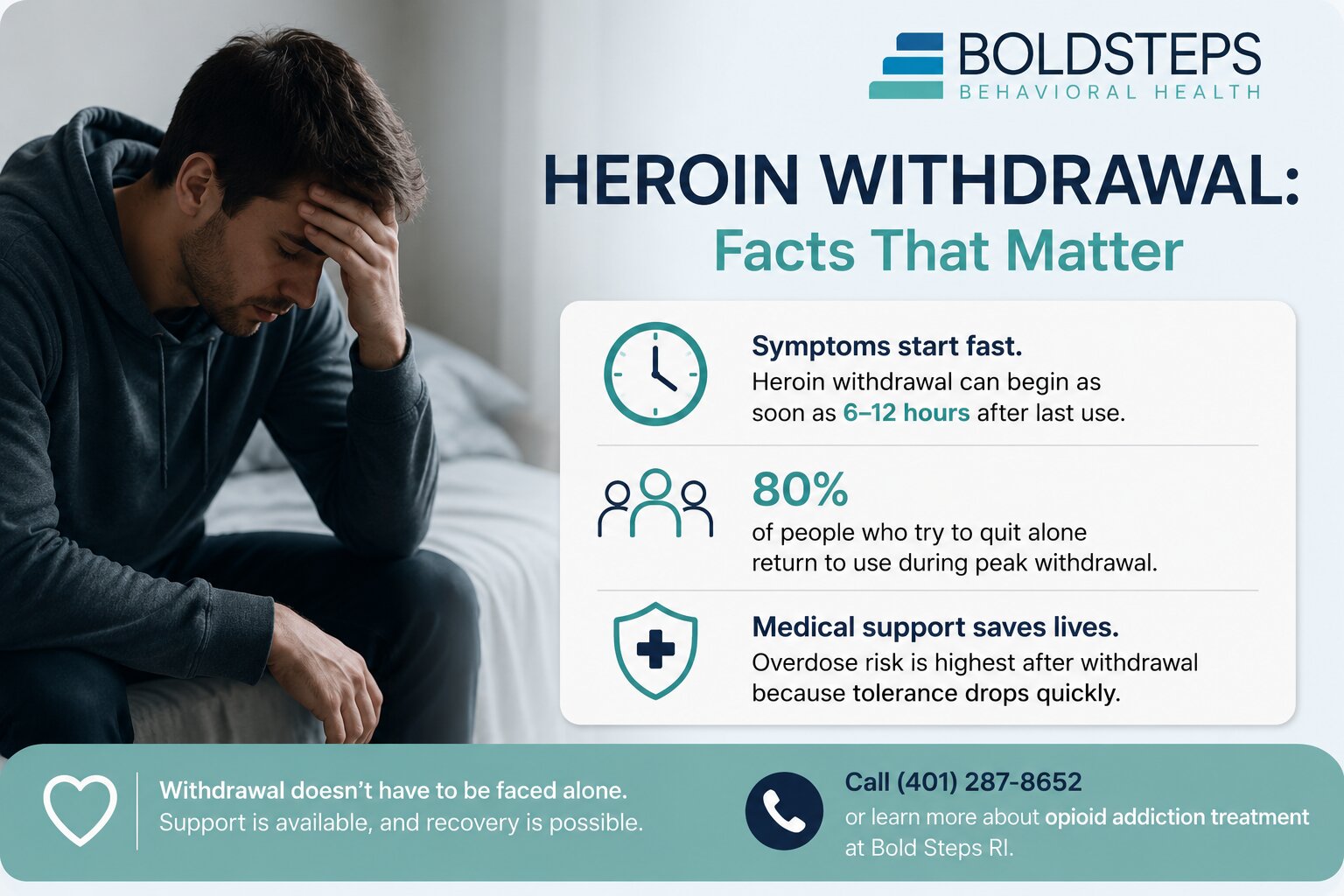
Because heroin is relatively short-acting, withdrawal often starts within several hours after the last dose.
Early symptoms may include:
- Anxiety
- Frequent yawning
- Sweating
- Runny nose
- Watery eyes
- Restlessness
- Difficulty relaxing
At this stage, many people recognize withdrawal beginning and may feel tempted to use heroin again simply to stop symptoms from progressing.
Hours 24–36
As withdrawal intensifies, physical symptoms become much harder to ignore.
People commonly experience:
- Nausea
- Vomiting
- Diarrhea
- Abdominal cramping
- Muscle pain
- Chills
- Goosebumps
- Severe insomnia
- Increased cravings
Eating and drinking may become difficult because of gastrointestinal symptoms.
Days 1–3: Peak Withdrawal
For most people, the most difficult period occurs during the first three days.
During this time:
- Physical discomfort is often at its highest.
- Sleep may be almost impossible.
- Cravings become extremely strong.
- Dehydration becomes a concern because of vomiting and diarrhea.
- Many unsupported withdrawal attempts end during this stage.
Although the symptoms are temporary, they can feel overwhelming while they are happening.
Days 5–7
Most physical symptoms gradually improve.
Many people begin noticing:
- Less nausea
- Reduced muscle pain
- Improved appetite
- Decreasing diarrhea
- Lower levels of sweating and chills
Sleep and energy often recover more slowly.
Weeks After Withdrawal
Even after acute withdrawal ends, some people continue experiencing:
- Cravings
- Anxiety
- Mood swings
- Irritability
- Poor sleep
- Difficulty experiencing pleasure
These lingering symptoms do not mean withdrawal is starting over. Instead, they reflect the brain continuing to recover after prolonged opioid use.
What Affects How Severe Heroin Withdrawal Is?
Not everyone experiences withdrawal in exactly the same way.
Several factors influence both symptom intensity and duration.
Duration of Use
Someone who has used heroin daily for years will often experience more severe withdrawal than someone with a shorter history of use.
Amount Used
Higher daily opioid exposure generally leads to greater physical dependence.
Method of Use
Whether heroin is injected, smoked, or snorted does not completely determine withdrawal severity, but patterns of use often differ among these methods and may influence dependence.
Fentanyl Exposure
Today’s heroin supply frequently contains fentanyl or fentanyl analogues.
Because many people are unaware fentanyl is present, withdrawal may become more complicated or prolonged than expected.
Previous Withdrawal Attempts
Repeated cycles of opioid use and withdrawal may make future withdrawal attempts feel more difficult emotionally, even when physical symptoms are similar.
Physical and Mental Health
Medical conditions, chronic pain, anxiety disorders, depression, and other mental health concerns may affect how withdrawal is experienced and how recovery progresses.
Why Medical Detox Matters—and Why Not to Go It Alone
Many people believe they simply need enough determination to get through withdrawal.
In reality, the problem usually isn’t motivation.
It’s that withdrawal becomes so physically and emotionally overwhelming that returning to opioid use feels like the only way to make it stop.
Medical detox helps reduce that burden.
Dehydration Can Become Serious
Repeated vomiting and diarrhea can lead to dehydration and electrolyte imbalances.
Medical professionals monitor hydration and can provide fluids, medications, and supportive care when needed.
Aspiration Is a Risk
Someone who vomits while extremely drowsy or exhausted may inhale stomach contents into their lungs, a complication known as aspiration.
Medical supervision helps reduce this risk, especially for people with other medical conditions or polysubstance use.
The Highest Relapse Risk Occurs During Peak Withdrawal
The first few days of withdrawal are when many people return to heroin use.
This doesn’t happen because treatment “failed.”
It happens because the symptoms become so severe that relief feels impossible to find elsewhere.
Medical support can make this period substantially more manageable.
Tolerance Drops Quickly
One of the most important reasons not to detox alone is what happens afterward.
During withdrawal, opioid tolerance decreases rapidly.
If someone returns to using the same amount of heroin they used before detox, the body may no longer tolerate that dose.
This dramatically increases the risk of overdose, particularly because fentanyl contamination is now common in the illicit opioid supply.
Medications Can Make Withdrawal Safer and More Comfortable
Evidence-based medications significantly improve the withdrawal experience and reduce relapse risk.
Buprenorphine (Suboxone®)
Buprenorphine is a partial opioid agonist that:
- Reduces withdrawal symptoms
- Decreases cravings
- Lowers overdose risk
- Supports long-term recovery
When started at the appropriate time under medical guidance, it can make withdrawal much more manageable.
Methadone
Methadone is a long-acting opioid agonist provided through licensed treatment programs.
It helps:
- Prevent withdrawal
- Reduce cravings
- Stabilize daily functioning
- Support long-term recovery
Both medications are backed by extensive research and are considered standard, evidence-based treatments for opioid use disorder.
Medication-assisted treatment does not simply replace one addiction with another. When prescribed appropriately, these medications help stabilize brain chemistry, reduce overdose risk, and improve recovery outcomes.
Getting Support
You don’t have to wait until withdrawal becomes unbearable before asking for help.
In fact, reaching out before your last use often provides the safest path forward.
Treatment teams can help you:
- Understand what to expect
- Decide whether medical detox is appropriate
- Begin medication-assisted treatment if indicated
- Develop a personalized recovery plan
- Connect with counseling and ongoing support
Many people worry that asking for help means they’ve somehow failed.
The opposite is true.
Recognizing that withdrawal is difficult—and choosing evidence-based care instead of suffering through it alone—is a practical medical decision.
Whether this is your first attempt to stop using heroin or you’ve tried before, professional treatment can make the process safer, more comfortable, and more sustainable.
Call (401) 287-8652 or learn more about opioid addiction treatment at Bold Steps RI. You don’t have to face heroin withdrawal by yourself.
Frequently Asked Questions
How long does heroin withdrawal last?
Early withdrawal often begins within 6 to 12 hours after the last use. Symptoms typically peak during the first one to three days and begin improving by days five to seven, although cravings, mood changes, and sleep problems may continue for several weeks.
Is heroin withdrawal dangerous?
Heroin withdrawal is usually not life-threatening on its own, but it can cause severe dehydration from vomiting and diarrhea, increase the risk of aspiration, and greatly raise the likelihood of relapse. Because opioid tolerance drops quickly during withdrawal, returning to previous doses significantly increases the risk of overdose.
What medications help with heroin withdrawal?
Evidence-based medications include buprenorphine (Suboxone®) and methadone. These medications reduce withdrawal symptoms and cravings and are considered standard treatments for opioid use disorder. A healthcare professional can determine which option is most appropriate based on your medical history and individual needs.