
For a long time, I thought I was just stressed.
That explanation felt reasonable. Life was busy. Work demanded more than ever. Relationships required attention. There was always another responsibility waiting around the corner.
So when my mind constantly raced, I assumed that was simply part of being an adult.
I told myself everyone worried this much.
Everyone replayed conversations before bed.
Everyone imagined worst-case scenarios before making decisions.
Everyone carried a knot in their stomach throughout the day.
At least that’s what I believed.
Eventually, though, I noticed something important.
The people around me seemed stressed sometimes.
I felt stressed all the time.
If you’ve started wondering whether your constant worrying might be more than everyday stress, you’re not alone. Many people begin asking this question long before they ever seek support. Some are simply looking for answers. Others are exploring healthier ways to cope as they become more mindful about habits involving alcohol or other substances.
If that sounds familiar, know that support through anxiety services exists for people who are ready to better understand what they are experiencing.
When Worry Becomes Your Default Setting
Stress usually has a cause.
A deadline.
A difficult conversation.
A financial challenge.
A major life change.
Once the situation improves, stress often eases as well.
Constant worry works differently.
Instead of responding to a specific event, your mind begins treating uncertainty itself as a threat.
One problem gets resolved.
Another immediately appears.
One concern disappears.
Three new concerns arrive.
It can feel like living with an internal alarm system that never fully turns off.
I remember reaching moments that should have felt peaceful.
A quiet Saturday morning.
A relaxing dinner.
A vacation I had been looking forward to for months.
Yet my mind still searched for problems.
What if something goes wrong?
What if I forgot something important?
What if this feeling doesn’t last?
Instead of enjoying the moment, I was preparing for disasters that hadn’t happened.
That is often when people begin realizing they may be dealing with something beyond normal stress.
The Signs Are Often Easier to See Looking Back
One reason constant worry can be difficult to recognize is because it develops gradually.
Rarely does someone wake up one morning and notice a dramatic change.
Instead, it tends to build slowly.
You start checking your phone more often.
You seek reassurance more frequently.
You spend extra time thinking through decisions.
You lose confidence in your ability to handle uncertainty.
Over time, those behaviors begin feeling normal.
Looking back now, I can see countless moments where worry was quietly shaping my decisions.
I declined invitations because I anticipated uncomfortable situations.
I postponed opportunities because I feared making mistakes.
I avoided conversations because I worried about how they would unfold.
At the time, every decision felt logical.
Only later did I realize how much space worry had been occupying in my life.
Your Body May Be Sending Signals Before Your Mind Does
Many people expect emotional struggles to show up as emotional symptoms.
In reality, the body often notices first.
You may experience:
- Difficulty sleeping
- Restlessness
- Muscle tension
- Frequent headaches
- Digestive issues
- Increased heart rate
- Constant fatigue
- Difficulty concentrating
For years, I assumed I was simply tired.
I blamed work.
I blamed my schedule.
I blamed poor sleep.
What I didn’t understand was that my nervous system had been operating in a near-constant state of alertness.
Imagine keeping your car engine running all day, every day.
Eventually, wear and tear begin to show.
The same thing can happen when your mind rarely gets an opportunity to rest.
The Search for Relief Can Become Its Own Cycle
One thing many sober-curious individuals discover is that constant worry often leads to constant coping.
Sometimes those coping strategies appear harmless.
Scrolling endlessly.
Staying busy.
Overworking.
Avoiding downtime.
Other times, alcohol becomes part of the routine.
Not necessarily because someone wants to drink excessively.
Because they want a break.
A quiet mind.
A moment of relief.
A temporary pause from the endless stream of thoughts.
The challenge is that temporary relief rarely solves the underlying problem.
The next day, the worries return.
Sometimes stronger than before.
Many people searching for anxiety help rhode island eventually realize they were not simply trying to relax.
They were trying to escape a level of mental exhaustion that had become overwhelming.
Recognizing that pattern can be an important turning point.
Everyday Life Starts Feeling Smaller
One of the most overlooked effects of constant worry is how gradually it limits your world.
You may begin avoiding situations that feel unpredictable.
You decline social events.
You delay important decisions.
You stop pursuing opportunities that once excited you.
Not because you lack interest.
Because uncertainty feels exhausting.
At first, these adjustments seem minor.
You skip one event.
You postpone one decision.
You avoid one difficult conversation.
But over time, those small choices accumulate.
Without realizing it, worry begins making decisions for you.
The result is often a life that feels smaller, quieter, and less fulfilling than the one you actually want.
People Around You May Notice the Change First
One difficult truth about constant worry is that it becomes familiar.
You adapt to it.
You stop questioning it.
You assume this is simply how your brain works.
Meanwhile, people who care about you may notice changes.
They might mention that you seem distracted.
They may ask why you appear tense.
They might notice that you’re physically present but emotionally elsewhere.
I remember hearing comments like these and brushing them aside.
“I’m just busy.”
“I’m just stressed.”
“I’m fine.”
But eventually I realized they were noticing something I had stopped seeing.
When multiple people express concern, it may be worth paying attention.
Sometimes those closest to us recognize our struggles before we do.
What Happens When You Finally Stop Ignoring It
The moment that changed things for me wasn’t dramatic.
There was no crisis.
No major breakdown.
No life-altering event.
Instead, there was a simple realization:
I was exhausted.
Not physically.
Mentally.
Emotionally.
I was tired of carrying worry everywhere I went.
That realization led me to ask a different question.
Instead of asking, “How do I survive another stressful week?”
I started asking, “What would life feel like if I didn’t have to carry this every day?”
That question changed everything.
Because it shifted my focus from managing symptoms to seeking solutions.
For many people, that journey begins with learning more about available support options, building healthier coping skills, and understanding how anxiety affects both the mind and body.
Individuals throughout Rhode Island often find comfort in knowing support in Locations is available when everyday coping strategies no longer feel sufficient.
A Different Future Is Possible
One of the biggest lies constant worry tells us is that nothing can change.
That this is simply who we are.
That we’ll always overthink.
Always anticipate disaster.
Always feel tense.
But that isn’t true.
The brain is capable of learning new patterns.
The nervous system can heal.
Healthy coping skills can be developed.
Support can make a meaningful difference.
The future doesn’t have to feel exactly like the present.
You do not need to wait until your life falls apart before taking your mental health seriously.
You do not need to prove how much suffering you can tolerate.
And you do not need to carry everything alone.
Sometimes the bravest thing a person can do is acknowledge that the weight they’ve been carrying has become too heavy.
And sometimes that single moment of honesty becomes the beginning of something better.
Frequently Asked Questions
How do I know if my worry is more than normal stress?
A good indicator is duration and intensity. Normal stress tends to come and go depending on circumstances. Constant worry often persists even when there is no immediate problem to solve and may interfere with sleep, concentration, relationships, or daily functioning.
Can alcohol make worry worse?
Yes. While alcohol may temporarily create feelings of relaxation, it can increase anxiety symptoms later as it leaves the body. Many people notice heightened worry, restlessness, or emotional discomfort after drinking.
What physical symptoms can constant worry cause?
Persistent worry can contribute to headaches, muscle tension, fatigue, digestive issues, difficulty sleeping, restlessness, rapid heartbeat, and trouble concentrating.
Is it possible to experience anxiety without realizing it?
Absolutely. Many people assume they are simply stressed, busy, or overwhelmed. Because symptoms often develop gradually, anxiety can become normalized until its impact becomes difficult to ignore.
When should I seek professional support?
Consider seeking support if worry feels difficult to control, interferes with daily life, affects relationships, disrupts sleep, or causes significant emotional distress. Early support can often prevent symptoms from becoming more disruptive over time.
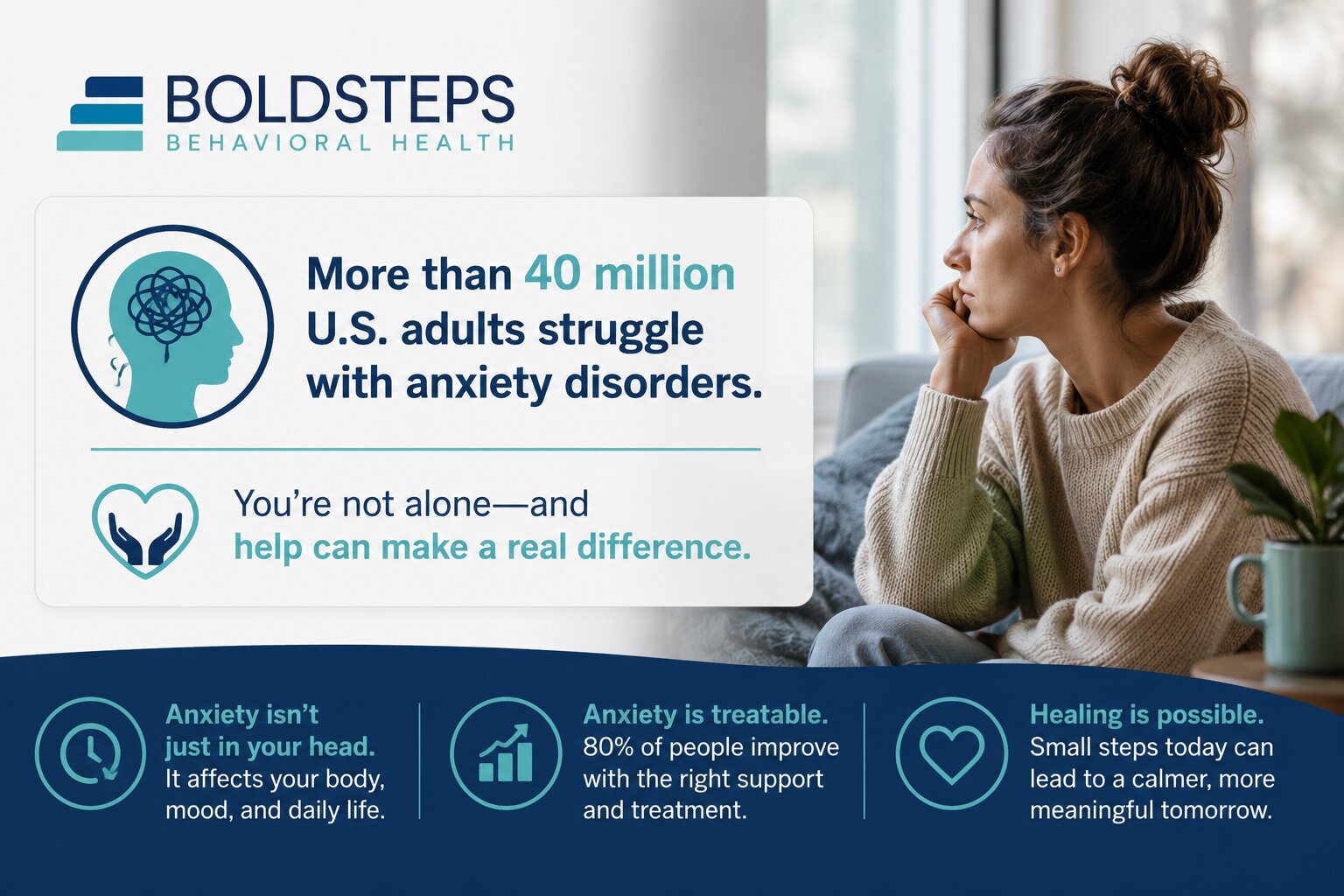
Can anxiety improve with treatment and support?
Yes. Many people experience meaningful improvement through therapy, healthy coping strategies, lifestyle changes, and professional support. Recovery is not about eliminating every anxious thought but learning how to respond to them in healthier ways.
Call (401) 287-8652 or visit our conditions and anxiety services to learn more about our conditions, anxiety services in Rhode Island.