
It Feels Like You’re Fine… Until You’re Not Anymore

It Feels Like You’re Fine… Until You’re Not Anymore

Some days, it feels manageable. Other days, it doesn’t.

You’re not in full crisis—but you’re also not okay in the way you used to be. If you’ve been quietly comparing options or wondering what level of support actually fits, you’re not alone. You can explore structured daytime care options anytime—but first, let’s slow this down and figure out what your experience is actually telling you.

Step 1: Notice If Curiosity Has Turned Into Exhaustion

Being sober curious usually starts with a sense of possibility.

You wonder if you’d feel better drinking less. You test boundaries. Maybe you take breaks and feel proud of yourself.

But over time, something can shift.

It stops feeling like a choice—and starts feeling like a constant negotiation.

You might find yourself thinking:

  • “Should I drink tonight?”
  • “How much is too much?”
  • “Why do I feel like this again?”

That mental back-and-forth is draining.

Curiosity feels open. Exhaustion feels heavy.

If you’re tired of thinking about it, tracking it, managing it… your body and mind may be asking for a different kind of support.

Step 2: Pay Attention to How Much Space This Is Taking Up

It’s not always about how often you drink.

Sometimes it’s about how much space it takes up in your life.

That includes:

  • The emotional aftermath (anxiety, low mood, irritability)
  • The mental replay of conversations or behaviors
  • The effort it takes to feel “normal” again the next day

You might still be functioning. Showing up. Keeping things together.

But underneath that, there’s a quiet cost.

If your energy is being spent recovering, managing, or compensating—it’s worth asking whether you’re carrying more than you need to.

Step 3: Be Honest About What Happens on the Hard Days

Most people don’t struggle every day.

It’s the harder days that reveal what kind of support you actually need.

The days where:

  • Stress hits all at once
  • Emotions feel harder to regulate
  • Your usual coping strategies don’t quite work

On those days, there’s usually a moment where things feel shaky—internally, emotionally, sometimes physically.

Ask yourself:

Do I feel supported enough to get through this without it spiraling?

If the answer feels uncertain, that’s not something to ignore.

More structured care exists for exactly those moments—not because you’ve failed, but because you deserve backup when things get heavy.

Step 4: Understand the Difference Between Flexible and Focused Support

This is where confusion tends to show up.

You might be comparing different levels of care and feeling unsure where you fit. Conversations around PHP vs IOP can make it feel more complicated than it needs to be.

Let’s simplify it in a way that actually helps:

  • Flexible, multi-day weekly treatment gives you support while leaving more of your day open. It works well if you’re stable enough to manage most things independently.
  • More structured daytime care offers a higher level of consistency. It gives your day shape, support, and accountability when things feel harder to manage on your own.

This isn’t about choosing the “right” label.

It’s about being honest with yourself about how much support would actually make your life feel easier—not just manageable.
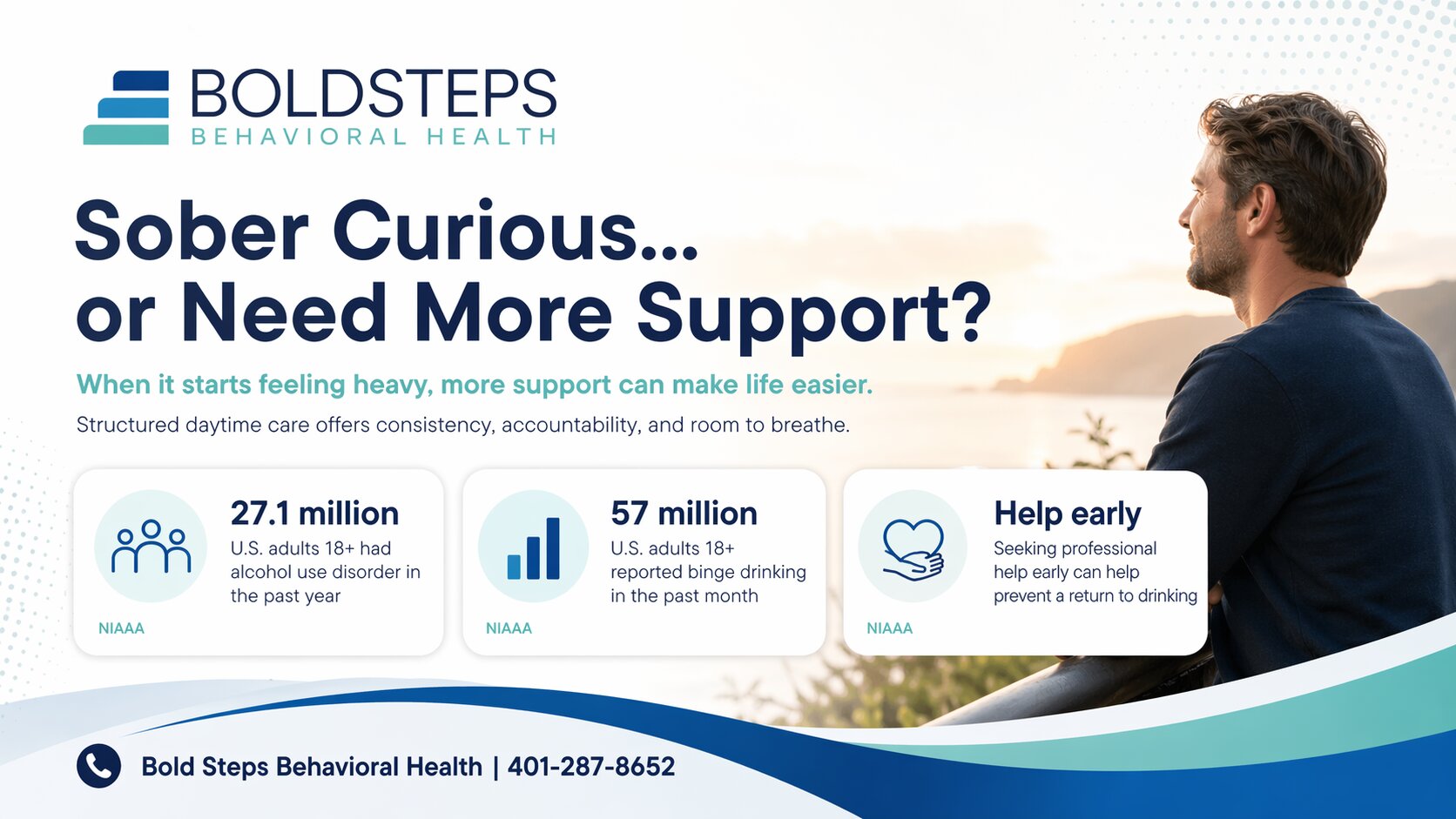
Am I Ready for More Support Than I Thought

Step 5: Check If You’re Minimizing What You’re Feeling

This step can be uncomfortable—but it’s important.

A lot of people quietly downplay their experience:

  • “Other people have it worse.”
  • “I’m still functioning.”
  • “I should be able to handle this.”

And while those thoughts might feel logical, they can keep you stuck.

Struggling doesn’t always look dramatic.

Sometimes it looks like holding everything together on the outside while feeling off on the inside.

If something feels different, harder, or heavier than it used to—that’s valid.

You don’t need to earn the right to feel better.

Step 6: Notice If You’re Waiting for a Clear Breaking Point

There’s a common belief that things need to get bad enough before you reach out.

But “bad enough” is a moving target.

You might keep adjusting to discomfort. Adapting. Pushing through.

Until one day, what used to feel manageable starts to feel overwhelming.

Here’s a different perspective:

Getting support early isn’t overreacting.
It’s preventing unnecessary suffering.

You’re allowed to step in before things fall apart.

Step 7: Imagine What It Would Feel Like to Be Supported Consistently

Try this for a moment—no pressure, just curiosity.

What would your day feel like if:

  • You didn’t have to manage everything on your own
  • You had structure instead of guesswork
  • You had space to talk honestly without being judged

More focused daytime care isn’t about taking over your life.

It’s about stabilizing it.

For many people, it feels like going from constantly reacting… to finally having something steady to stand on.

Like switching from treading water to touching solid ground.

Step 8: Let This Be About Relief, Not Identity

You don’t need to decide what to call yourself.

You don’t need to land on a label before taking a step.

“Sober curious” doesn’t have an expiration date. And needing more support doesn’t cancel that identity—it builds on it.

This is simply about one question:

Would more support help me feel better?

If the answer is yes—or even a quiet maybe—that’s worth listening to.

Frequently Asked Questions

How do I know if I’m still just sober curious?

If you’re exploring your relationship with alcohol without feeling overwhelmed, stuck, or emotionally drained, you may still be in that exploratory phase. But if it feels heavier—like something you’re constantly managing—it may be time to consider more support.

What’s the difference between structured daytime care and multi-day weekly treatment?

Structured daytime care offers more consistent, immersive support during the day, while multi-day weekly treatment is more flexible and less time-intensive. The right fit depends on how much support you need to feel stable.

Does needing more support mean my situation is serious?

Not necessarily. It means your current level of support might not be enough for what you’re experiencing right now. Support is about fit—not severity.

What if I’m scared to commit to something more structured?

That’s completely normal. Most people feel unsure at first. The first step isn’t committing—it’s asking questions and understanding your options.

Can I still work or manage responsibilities with more structured care?

In many cases, yes. Different programs are designed to work alongside your life, not replace it. The goal is to support you while helping you stay connected to what matters.

What if I try it and it’s not the right fit?

That’s okay. Finding the right level of care can take adjustment. What matters is that you’re taking steps toward feeling better—not getting it perfect the first time.

You Don’t Have to Figure This Out Alone

There’s nothing dramatic about wanting your life to feel easier.

There’s nothing extreme about asking for more support before things get overwhelming.

There’s just you—paying attention to something that matters.

And that’s a strong place to start.

Call 401-287-8652 or visit our structured daytime care options to learn more about our partial hospitalization program services in Rhode Island.


Are You Covered for Addiction Treatment? Find Your Insurance.

Contact Us 24/7

Friendly Operators are Standing By

Inner Form

Name(Required)

Quick Answer

Will group therapy be part of my plan?
Yes — group therapy is a cornerstone of every Bold Steps program.

Best fit if you struggle with: isolation, shame, difficulty opening up, relapse triggers, or needing accountability.

Pairs with: CBTDBTTrauma TherapyEMDRFamily Therapy, and our Alumni Program.

Where you’ll get it: Offered across Day TreatmentNight Treatment, and Outpatient programs; format and frequency adjust by level of care.

Estimated Time To Complete: ~2 mins

Who needs help? *

We’re here to help with your recovery. Please fill out this short form so our team can
understand your needs.

Myself

Myself

If you have any further questions about treatment, you may contact us directly at (888) 440-4306

Quick Answer

Will family therapy be part of the plan?
Almost always, yes. Bold Steps includes a free weekly virtual Family Support Group (open to loved ones even if their family member isn’t in treatment), plus scheduled family therapy sessions as part of treatment.

Best fit if your family struggles with: broken trust, enabling patterns, miscommunication, resentment, or uncertainty about how to help.

Pairs with: CBTDBTTrauma TherapyEMDRFamily Therapy, and our Alumni Program.

Where you’ll get it: Across all levels of care — DayHalf-DayOutpatient — plus our virtual group accessible from anywhere.

Estimated Time To Complete: ~2 mins

Who needs help? *

We’re here to help with your recovery. Please fill out this short form so our team can
understand your needs.

Myself

Myself

If you have any further questions about treatment, you may contact us directly at (888) 440-4306

Quick Answer

Will EMDR be part of my plan?
Likely if you struggle with trauma memories, flashbacks, nightmares, panic tied to past events, or relapse linked to trauma triggers.

What EMDR pairs well with: DBT for emotion stabilization, CBT for thought reframing, MAT for cravings that block therapy work, and mindfulness/yoga for grounding.

Where you’ll get it: Often in Day Treatment or Night Treatment programs, once you’ve built some stabilization skills.

Estimated Time To Complete: ~2 mins

Who needs help? *

We’re here to help with your recovery. Please fill out this short form so our team can
understand your needs.

Myself

Myself

If you have any further questions about treatment, you may contact us directly at (888) 440-4306

Quick Answer

Will DBT be part of my plan?
Likely if you struggle with big emotion swings, impulsive actions (including substance use), self-harm urges, relationship blowups, or relapse tied to “I can’t handle this feeling.”

What DBT pairs well with: CBT for thought work, trauma therapy like EMDRMAT for opioid cravings, or mindfulness/yoga for nervous system reset.

Where you’ll get it: Day TreatmentNight Treatment, or Outpatient — intensity depends on your level of care.

Estimated Time To Complete: ~2 mins

Who needs help? *

We’re here to help with your recovery. Please fill out this short form so our team can
understand your needs.

Myself

Myself

If you have any further questions about treatment, you may contact us directly at (888) 440-4306

CBT at Bold Steps: Will This Be Part of My Plan? Quick Answer

Will CBT be part of my plan?
Likely if you’re dealing with racing thoughts, catastrophic thinking, relapse triggers, shame spirals, avoidance, panic, or insomnia.

We may combine it with: DBT for emotion regulation, EMDR for trauma, MAT for opioid cravings, or mindfulness/yoga for calming your nervous system.

Where you’ll get it: CBT is woven into Day TreatmentHalf-Day Treatment, and Outpatient care.

Estimated Time To Complete: ~2 mins

Who needs help? *

We’re here to help with your recovery. Please fill out this short form so our team can
understand your needs.

Myself

Myself

If you have any further questions about treatment, you may contact us directly at (888) 440-4306

Support for the People Who Love You

When it helps, we include family—on your terms. We offer education, boundary coaching, and ways to rebuild trust while keeping your privacy and safety at the center.

We cover:

  • What to say (and not say)
  • Healthy support vs. enabling
  • How to help between sessions

Estimated Time To Complete: ~2 mins

Who needs help? *

We’re here to help with your recovery. Please fill out this short form so our team can
understand your needs.

Myself

Myself

If you have any further questions about treatment, you may contact us directly at (888) 440-4306

Care That Fits Your Schedule

Recovery is easier when care works with your real life. Choose daytime structure or evening groups—both with evidence-based therapy and a clear weekly plan. Switch times if your schedule changes.

Highlights:

  • Predictable weekly calendar
  • Missed-session catch-ups
  • Option to step up or down

Estimated Time To Complete: ~2 mins

Who needs help? *

We’re here to help with your recovery. Please fill out this short form so our team can
understand your needs.

Myself

Myself

If you have any further questions about treatment, you may contact us directly at (888) 440-4306

Find the Right Level of Care

Treatment should match your life—not the other way around. We’ll recommend a level that fits your symptoms, safety needs, and schedule so progress sticks at home, work, and school.

Options include:

  • Day Treatment  
  • Night Treatment  
  • Outpatient & step-downs

Estimated Time To Complete: ~2 mins

Who needs help? *

We’re here to help with your recovery. Please fill out this short form so our team can
understand your needs.

Myself

Myself

If you have any further questions about treatment, you may contact us directly at (888) 440-4306

Your Journey To Recovery Starts Now

Boldsteps Behavioral Health offers same-day admission for those seeking help for substance use disorder. Our simple admissions process takes just minutes. Call today for a free, private consultation.

Estimated Time To Complete: ~2 mins

Who needs help? *

We’re here to help with your recovery. Please fill out this short form so our team can
understand your needs.

Same Day Admission

Myself

Myself

If you have any further questions about treatment, you may contact us directly at (888) 440-4306

Verify Your Benefits in 2 Minutes

We’ll check your coverage and explain your options in plain language—no pressure, no jargon. Most plans include part of treatment; we’ll confirm what’s in-network and your estimated out-of-pocket before you decide.

You’ll get:

  • Eligibility + deductible summary
  • Programs your plan covers
  • Next-step timeline

Estimated Time To Complete: ~2 mins

Who needs help? *

We’re here to help with your recovery. Please fill out this short form so our team can
understand your needs.

Myself

Myself

If you have any further questions about treatment, you may contact us directly at (888) 440-4306

Proven Care, Whole-Person Support

We combine therapies that work—CBT, DBT skills, medication management—with holistic supports like mindfulness, movement, and creative groups. You’ll build practical tools you can use the same day.

You’ll practice:

  • Craving + emotion skills
  • Relapse-prevention planning
  • Sleep, nutrition, and routines

Estimated Time To Complete: ~2 mins

Who needs help? *

We’re here to help with your recovery. Please fill out this short form so our team can
understand your needs.

Myself

Myself

If you have any further questions about treatment, you may contact us directly at (888) 440-4306