
A lot of parents are waiting for a moment that feels undeniably “serious.”
A suicide note. A psychiatric hospitalization. A phone call in the middle of the night. Some clear, unmistakable proof that their child needs more help than weekly therapy or encouragement at home can provide.
But many young adults struggling with depression never have that dramatic moment.
Instead, they slowly stop functioning.
They stop going to class. Miss work repeatedly. Sleep all day. Cry constantly. Withdraw from friends. Stop answering texts. Start saying things like “I’m tired” in a way that feels heavier than exhaustion.
And because they are technically “not suicidal,” families often stay trapped in uncertainty far longer than they need to.
That gray area is real. It is painful. And it confuses a lot of loving parents.
If you have been searching for structured mental health support options while quietly wondering whether your child’s depression has become more serious than they admit, you are not alone.
Emotional Collapse Does Not Always Look Like an Emergency
This is one of the hardest things for parents to understand emotionally:
Someone can be deeply unwell without actively wanting to die.
Depression is not always dramatic or obvious. Sometimes it looks like a person slowly losing the ability to participate in their own life.
Parents often notice changes like:
- Missing work or classes repeatedly
- Crying almost every day
- Sleeping excessively or barely sleeping at all
- Avoiding family and friends
- Losing motivation completely
- Increased irritability or emotional outbursts
- Panic attacks
- Trouble completing basic tasks
- Neglecting hygiene or responsibilities
- Emotional numbness
- Increased drinking or substance use
- Statements like “I can’t do this anymore” or “Everything feels pointless”
The absence of suicidal language can create a false sense of safety.
But severe emotional distress often exists long before someone openly says they want to die.
In fact, many young adults struggling with major depression are too emotionally exhausted to even describe what they’re feeling clearly.
Parents Often Talk Themselves Out of Trusting Their Instincts
Many parents entering this situation spend months questioning themselves.
You may wonder:
“Am I overreacting?”
“Is this just stress?”
“Is this what young adulthood looks like now?”
“What if pushing treatment damages our relationship?”
Those questions are normal.
Especially when your child is technically still functioning sometimes. Maybe they have a good day here and there. Maybe they laugh occasionally. Maybe they insist they’re “fine” even while clearly struggling.
That inconsistency can make parents second-guess what they’re seeing.
But emotional suffering does not need to become catastrophic before it deserves attention.
One parent once told us:
“I kept waiting for something worse to happen so I could feel justified getting more help.”
That waiting period can be incredibly painful for families because they are often witnessing slow deterioration without knowing whether they are “allowed” to intervene yet.
You are allowed to take emotional decline seriously before it becomes an emergency.
Young Adults Often Hide the Severity of Depression
Many parents expect severe depression to look obvious.
But young adults frequently become very skilled at masking emotional pain—especially if they feel ashamed, overwhelmed, or afraid of disappointing people.
Some minimize symptoms because they genuinely do not know how to explain what’s happening internally.
Others are terrified that needing more help means they have failed somehow.
And many become trapped in a cycle that looks like laziness from the outside but actually reflects emotional paralysis.
They feel overwhelmed → they avoid responsibilities → guilt builds → anxiety worsens → functioning becomes even harder.
Over time, daily life can start feeling impossible.
Even small tasks become emotionally heavy. Returning texts feels exhausting. Getting out of bed feels overwhelming. Work or school begins slipping because the nervous system is already overloaded before the day even starts.
Parents often interpret this as lack of motivation.
More often, it is a sign of emotional depletion.
“Not Suicidal” Is Sometimes a Very Low Bar
This is difficult to say out loud, but many families need to hear it:
The goal is not simply keeping someone alive.
The goal is helping them become emotionally stable enough to actually participate in life again.
A young adult who is crying constantly, unable to function, withdrawing socially, or emotionally collapsing every few days may need far more support than they are currently receiving—even if they deny suicidal thoughts.
And sometimes parents unintentionally minimize the seriousness because they are so relieved their child is “not suicidal.”
That relief makes sense emotionally.
But there is a huge space between thriving and actively suicidal.
A very large gray area exists there.
That gray area matters.
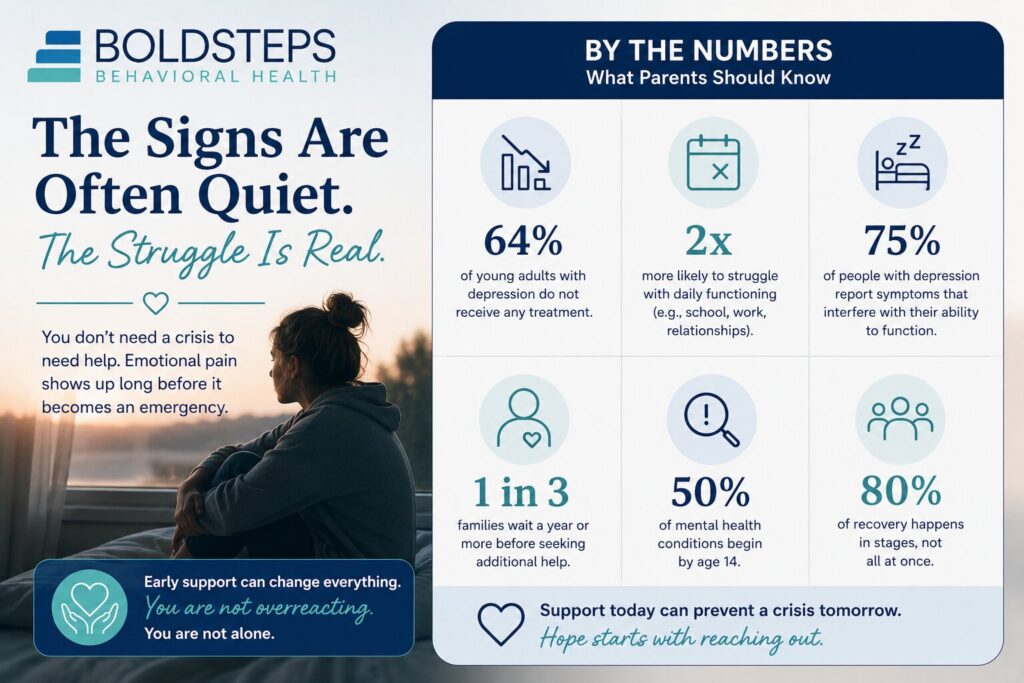
Structured Daytime Care Exists for This Exact Middle Ground
Many parents assume there are only two mental health options:
Weekly therapy or inpatient hospitalization.
But there is a middle level of support designed specifically for people whose symptoms are too severe for traditional outpatient therapy alone but who do not necessarily need overnight hospitalization.
Structured daytime care provides intensive therapeutic support several days a week while allowing individuals to return home afterward.
For many young adults, this level of care creates enough consistency and emotional stabilization to interrupt the downward spiral before things worsen further.
This type of support may help when someone is:
- Missing school or work repeatedly
- Crying daily
- Barely functioning emotionally
- Isolating heavily
- Experiencing severe depression or anxiety
- Struggling after a mental health crisis
- Unable to manage responsibilities consistently
- Searching online late at night for depression help near me because they know they cannot keep functioning this way much longer
Families often feel immense relief simply learning there are options between “nothing” and “full hospitalization.”
Parents Are Carrying More Fear Than They Admit
One thing parents rarely talk about openly is how frightening this situation becomes emotionally.
You start monitoring texts differently. Listening for tone changes. Watching sleep patterns. Wondering whether your child is safe every time they stop responding.
You replay conversations in your head constantly.
Did I say the wrong thing?
Am I helping too much?
Not enough?
Should I push harder?
Back off?
That uncertainty can wear parents down quietly over time.
Especially when they are trying to stay calm for everyone else.
Many parents also carry guilt they never say out loud. They wonder if they missed warning signs earlier. Whether they caused this somehow. Whether they should have stepped in sooner.
Most families navigating this are doing the best they can with a situation that feels emotionally impossible at times.
You are not failing because your child is struggling.
Recovery Often Begins With Stabilization, Not Motivation
A lot of people assume treatment only works if someone feels fully motivated.
But depression often drains motivation completely.
That does not mean healing is impossible.
In many cases, people need support precisely because they no longer have enough emotional energy to keep managing everything alone.
Structured treatment can help rebuild things depression gradually strips away:
- Daily routine
- Emotional regulation
- Social connection
- Sleep stability
- Self-worth
- Coping skills
- Hope
And hope usually returns slowly.
Not all at once.
A young adult starts attending consistently. They begin getting out of bed more regularly. They reconnect with people. The crying becomes less constant. Their nervous system softens enough for them to think clearly again.
Those changes matter deeply.
Even when they happen quietly.
You Do Not Need to Wait for a Breaking Point
One of the biggest misconceptions about mental health care is that people need to “earn” higher levels of support through complete collapse.
They do not.
You do not need a suicide attempt before exploring intensive care options.
You do not need police involvement or hospitalization before taking emotional suffering seriously.
If your child’s mental health is interfering with daily functioning, relationships, emotional stability, or their ability to cope safely, that is already significant.
And early support often prevents deeper crises later.
Sometimes the bravest thing a family does is stop waiting for undeniable proof and respond to the pain already happening in front of them.
FAQ
Does someone need to be suicidal to need intensive mental health treatment?
No. Many people need higher levels of support because they are emotionally overwhelmed, severely depressed, unable to function consistently, or rapidly declining emotionally—even without active suicidal thoughts.
What are signs a young adult may need more support than weekly therapy?
Frequent crying, missing work or school, emotional numbness, isolation, panic attacks, inability to complete daily responsibilities, severe anxiety, or increasing substance use can all indicate a need for more structured support.
What if my child says they’re fine?
Many young adults minimize symptoms because they feel ashamed, exhausted, or afraid of worrying their family. Parents often notice behavioral changes before their child fully understands how serious things have become.
Is structured daytime care the same as inpatient hospitalization?
No. Structured daytime care provides intensive support during the day while allowing individuals to return home afterward. It can help people stabilize emotionally without requiring overnight hospitalization.
What if my child refuses help?
Resistance is common, especially when someone feels emotionally depleted or frightened. Gentle conversations focused on support—not punishment—can sometimes lower defensiveness over time.
How do I know whether this situation is “serious enough”?
If your child’s emotional health is interfering with daily functioning, relationships, school, work, or basic coping abilities, it is serious enough to explore additional support.
Can depression really make someone stop functioning completely?
Yes. Severe depression can impact energy, concentration, motivation, emotional regulation, sleep, and physical functioning. What looks like laziness or avoidance is often profound emotional exhaustion.
What should I say to my child if I’m worried?
Try focusing on observations instead of accusations. Statements like “I’ve noticed you seem overwhelmed lately” or “I’m worried because this looks really hard right now” often feel safer than pushing for immediate answers.
Call (401) 287-8652 or explore our partial hospitalization program services to learn more about mental health support options for young adults and families.