
Ninety days.
For a while, that number felt like proof that I was finally getting my life back.
Ninety days without drinking.
Ninety days without waking up filled with regret.
Ninety days of rebuilding trust with people I loved.
Ninety days of believing that maybe, just maybe, things were finally changing.
Then I relapsed.
The strange thing is that the relapse itself lasted a few hours.
The shame lasted much longer.
If you’ve ever relapsed after a period of sobriety, you may understand what I’m talking about.
The drinking or drug use ends.
But the mental replay begins.
You revisit every mistake.
Every warning sign.
Every promise you made to yourself.
You start questioning everything.
Were those ninety days even real?
Did recovery actually work?
Do I deserve help again?
For me, those questions became louder than anything else.
And they kept me from doing the one thing I probably needed most:
Picking up the phone.
When I eventually learned more about options like structured daytime support, I realized something important. The obstacles keeping me from reaching out were not the ones I originally thought.
The real barriers were relapse, shame, and fear.
And all three were lying to me.
The Relapse Wasn’t What Broke My Confidence
Before my relapse, I thought the biggest risk was drinking again.
Afterward, I realized the bigger danger was what happened inside my head.
The moment I relapsed, my brain created a story.
A story that sounded something like this:
“You blew it.”
“You had your chance.”
“You should have known better.”
“Everyone is going to be disappointed.”
“You’ve already proven you can’t do this.”
At first, those thoughts felt true.
That’s the problem with shame.
It doesn’t arrive looking like shame.
It arrives disguised as certainty.
It convinces you that your worst fears are simply facts.
For weeks, I carried those thoughts around like heavy stones in my pockets.
Everywhere I went, they came with me.
At work.
At home.
In the car.
Lying awake at night.
The relapse itself had ended.
But mentally, I kept reliving it.
Nobody Was Judging Me More Than I Was Judging Myself
One of the biggest surprises came when I finally told someone what happened.
I expected disappointment.
I expected frustration.
I expected lectures.
Instead, I got compassion.
That felt almost uncomfortable.
Because by then I had already sentenced myself.
The reality was that nobody was criticizing me as harshly as I was criticizing myself.
This happens to many people after relapse.
Friends may offer support.
Family may express concern.
Treatment professionals may encourage next steps.
Meanwhile, the individual experiencing the relapse often becomes their own toughest critic.
Looking back, I realize I wasn’t avoiding treatment because I thought other people would judge me.
I was avoiding treatment because I was judging myself.
And when self-judgment becomes intense enough, it creates distance from the very support that could help.
I Thought Asking for Help Again Would Be Embarrassing
There was another fear I couldn’t shake.
What would I even say?
How do you call someone after a relapse?
How do you explain that you need help again?
Would they think I wasted everyone’s time?
Would they question whether I was serious about recovery?
The imagined conversation became so intimidating that I avoided having it entirely.
What I eventually learned was that treatment providers hear stories like mine every day.
Not because people are failing.
Because recovery is often more complicated than people realize.
Many individuals return for additional support.
Many people need different levels of care at different stages.
Many people experience setbacks and continue moving forward.
The professionals I spoke with did not seem shocked.
They did not seem disappointed.
They seemed focused on one thing:
“What happens next?”
That simple shift changed my perspective.
The Insurance Questions Became a Convenient Delay
Once the emotional fears settled in, practical concerns took over.
One concern stood above the rest.
Money.
Could I afford additional treatment?
Would insurance cover anything?
Would I create financial problems for myself or my family?
Like many people, I started researching instead of calling.
I spent hours reading articles.
I compared information.
I searched phrases like PHP cost with insurance repeatedly.
I tried to calculate every possible outcome before speaking to a real person.
The irony is that all that research created more anxiety.
Not less.
The more information I consumed, the more confused I became.
Eventually, I realized something important.
The internet could provide possibilities.
A conversation could provide answers.
When I finally reached out, many of the financial questions that had kept me stuck for weeks were addressed quickly and clearly.
The uncertainty had been heavier than the reality.
I Forgot That Recovery Is Allowed to Change
Another mistake I made was assuming recovery should always look exactly the same.
I thought the plan that worked before should continue working forever.
When it didn’t, I viewed that as failure.
Now I see it differently.
Life changes.
Stress changes.
Relationships change.
Mental health changes.
Recovery often needs to adapt as well.
Sometimes people need more support.
Sometimes they need different support.
Sometimes they need a fresh perspective.
None of those situations automatically indicate failure.
They simply indicate change.
And change often requires adjustment.
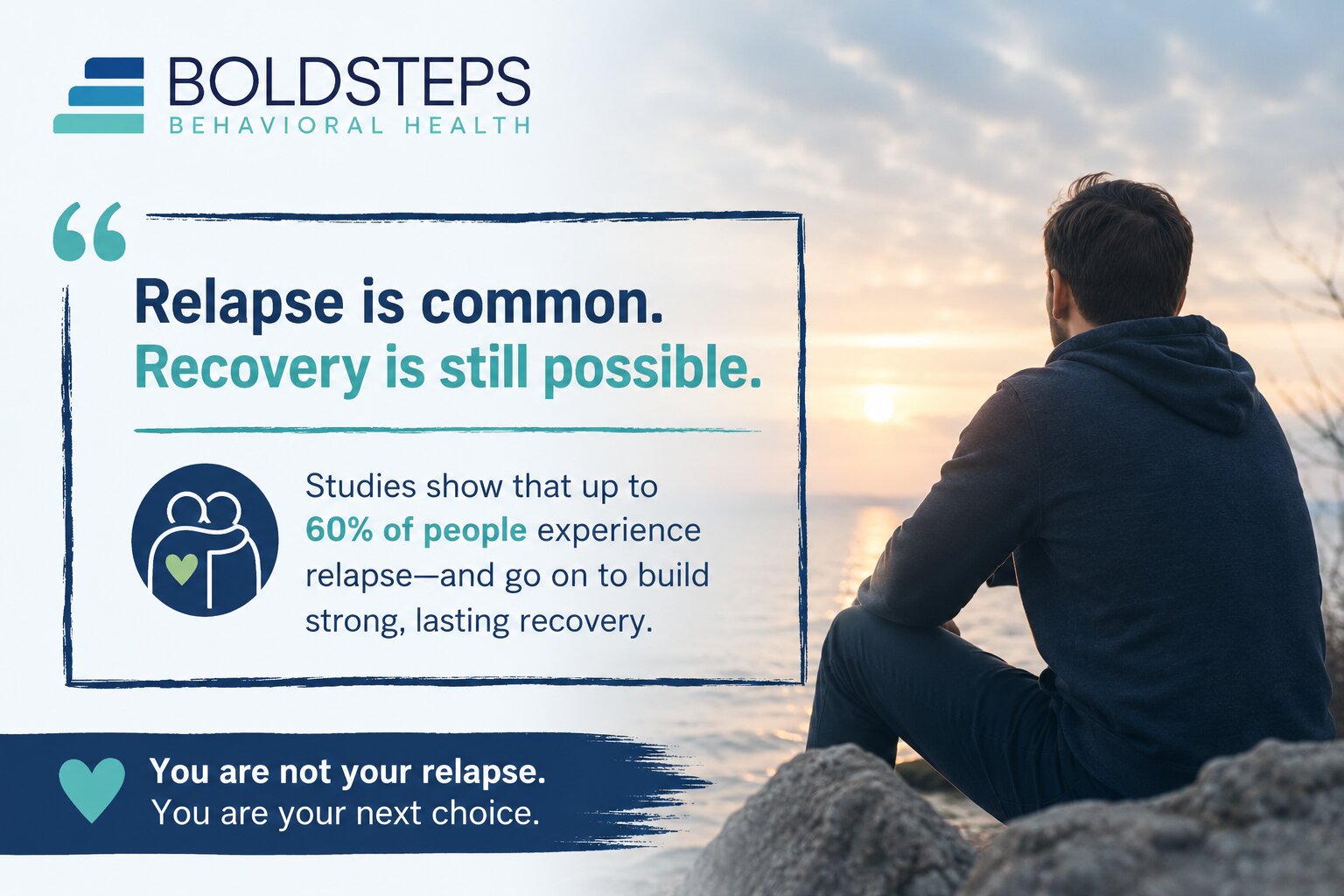
The relapse was not evidence that recovery was impossible.
It was evidence that my recovery plan needed attention.
The Weight of Carrying It Alone
One thing I wish more people understood is how exhausting silence can become.
After my relapse, I isolated.
Not physically at first.
Emotionally.
I stopped being honest.
I stopped sharing what was happening.
I started carrying everything alone.
And the weight grew heavier every day.
Recovery struggles in isolation.
Shame thrives in isolation.
Fear grows in isolation.
The experience reminded me of being stuck in a dark room.
The longer I stayed there, the more convinced I became that darkness was permanent.
The moment I opened the door and let someone else in, things looked different.
Not perfect.
Not easy.
But different.
And different was enough to begin moving again.
The Call Was Easier Than the Weeks I Spent Avoiding It
I built that phone call into something enormous.
I imagined it for weeks.
I rehearsed it.
I postponed it.
I worried about it.
Then I finally made it.
The conversation lasted minutes.
The fear lasted weeks.
That’s something I think about often.
How many people are suffering through weeks of fear over a conversation that could provide clarity almost immediately?
How many people are convinced they need to have everything figured out before reaching out?
I certainly believed that.
The truth was much simpler.
I didn’t need a perfect plan.
I just needed to start the conversation.
The Most Important Thing I Learned
If there is one lesson I wish I could hand directly to anyone reading this after a relapse, it would be this:
Needing more help does not mean you’ve failed.
Needing more help means you need more help.
That’s it.
No hidden meaning.
No deeper judgment.
No evidence that you’re broken.
Recovery is not measured by perfection.
It is measured by persistence.
Sometimes persistence looks like ninety days sober.
Sometimes persistence looks like getting back up after a relapse.
Both count.
Both matter.
Both deserve respect.
Many individuals seeking care in Locations eventually discover that recovery is not about never struggling again.
It’s about refusing to stop trying.
Hope Can Start Smaller Than You Think
When people talk about hope, they often describe it as something powerful.
Something inspiring.
Something dramatic.
That wasn’t my experience.
Hope returned quietly.
It arrived the moment I realized I wasn’t being judged.
It arrived when I learned I still had options.
It arrived when someone treated me like a person instead of a problem.
Most importantly, it arrived when I stopped asking whether I deserved help and started asking what kind of help I needed.
That small shift changed everything.
If you’re carrying shame right now, know this:
You are not the first person to relapse.
You will not be the last.
And your story is not over.
The chapter you’re in may be painful.
But it does not get to write the ending.
Frequently Asked Questions
Does relapse mean my previous recovery efforts were wasted?
No. The progress, skills, insight, and self-awareness developed during recovery do not disappear because of a relapse. Many people continue building on what they learned.
Is shame normal after a relapse?
Yes. Shame is one of the most common emotional responses after relapse. Unfortunately, it can also become a barrier that prevents people from seeking support.
Should I contact a treatment provider immediately after a relapse?
Many people find that reaching out sooner rather than later helps reduce uncertainty and provides guidance about potential next steps.
What if I completed treatment before?
Returning for support is common. Recovery needs can change over time, and many individuals benefit from additional care at different stages of their journey.
Will insurance help cover treatment?
Coverage varies based on the individual plan and circumstances. Speaking directly with a provider is often the best way to understand available options.
Why do so many people avoid making the call?
Fear, shame, embarrassment, uncertainty, and financial concerns often create hesitation. Many people discover the actual conversation is far easier than they imagined.
Can recovery continue after multiple relapses?
Yes. Many individuals who experience one or more relapses go on to achieve long-term recovery. A setback does not determine the final outcome.
What if I don’t feel ready?
Many people reach out before feeling fully ready. You do not need all the answers before having a conversation. Sometimes clarity comes after taking the first step.
Call (401) 287-8652 or visit our partial hospitalization program services to learn more about our partial hospitalization program services in Rhode Island.