
A mother once told me something I have never forgotten.
She said, “Every time he comes home from detox, I feel hopeful again. And every time he starts drinking, it feels like I lose him twice.”
First, she lost him to alcohol.
Then she lost the hope she had allowed herself to feel.
If you’re the parent of a young adult who keeps relapsing after detox, you may understand exactly what she meant.
You may be exhausted from watching the same cycle repeat itself.
A crisis happens.
Your son or daughter agrees to get help.
Detox goes well.
Everyone feels optimistic.
A few weeks pass.
Then something changes.
The drinking returns.
The fear returns.
The confusion returns.
And you’re left asking the same question:
“Why does this keep happening?”
As a clinician, I’ve had this conversation with many parents. One of the most important things I want you to know is this:
Repeated relapse after detox does not automatically mean your child doesn’t want recovery.
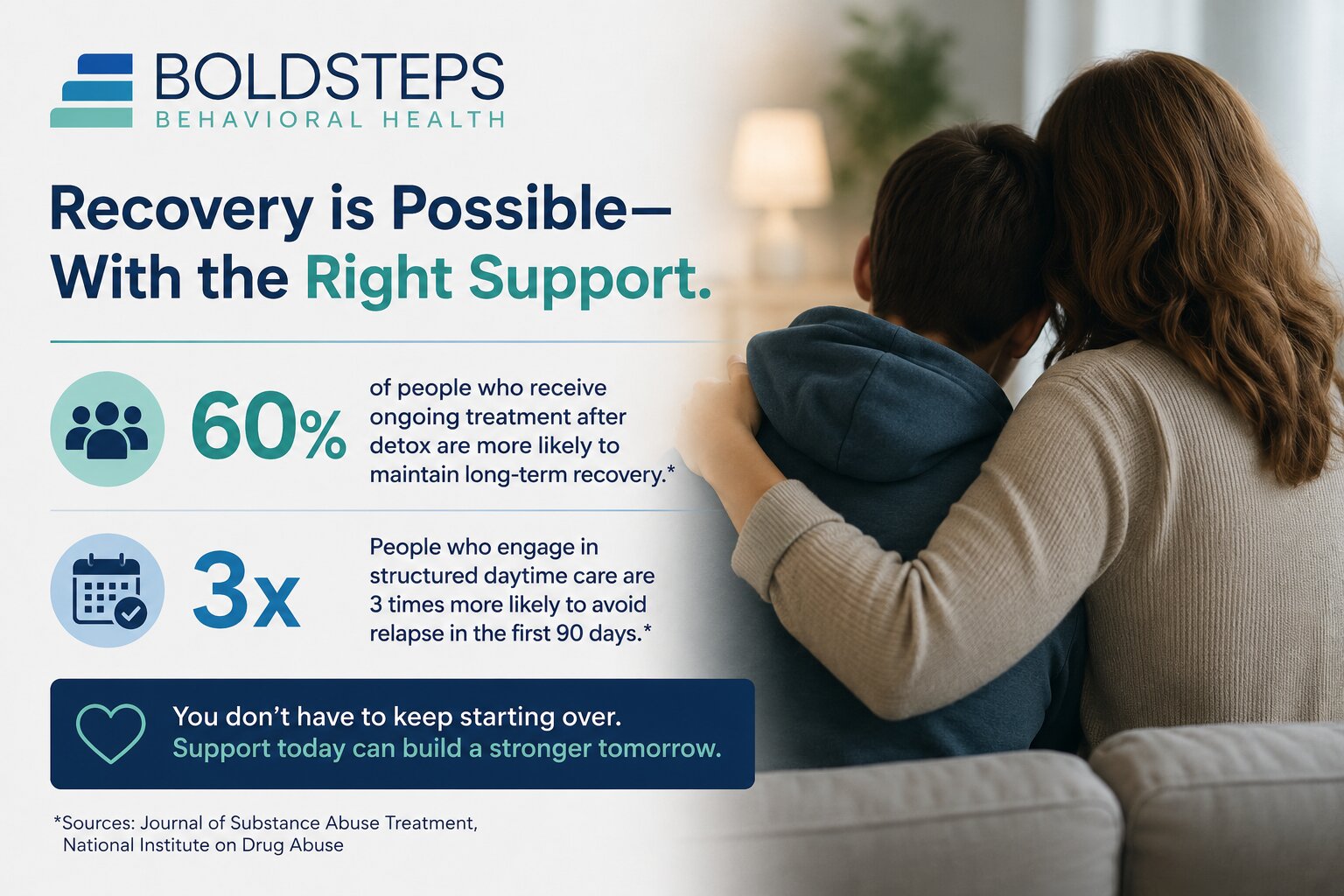
Often, it means they haven’t received enough support after detox to build lasting stability.
If you’ve been searching for answers, learning more about structured daytime recovery support may help you understand why some people need more than detox and weekly therapy to break the cycle.
The Problem Isn’t Always Motivation
Parents often assume relapse happens because their child isn’t trying hard enough.
Young adults often assume the same thing.
They tell themselves they lacked discipline.
They weren’t committed enough.
They didn’t want recovery badly enough.
Most of the time, that’s not what I’m seeing.
Many young adults genuinely want their lives to change.
They want the drinking to stop.
They want to repair relationships.
They want to feel normal again.
The challenge is that motivation and preparation are not the same thing.
Imagine teaching someone to swim.
You can be highly motivated to stay afloat.
But motivation alone won’t teach you how to handle rough water.
Recovery works similarly.
Wanting change is important.
Learning how to navigate daily life without alcohol is equally important.
Detox Is the Beginning, Not the Finish Line
One of the biggest misconceptions families have about treatment is believing detox is supposed to solve the problem.
Detox serves a critical purpose.
It helps stabilize the body.
It helps manage withdrawal.
It helps people get through the immediate physical effects of stopping alcohol.
But detox doesn’t teach someone how to handle stress.
It doesn’t rebuild damaged relationships.
It doesn’t address anxiety.
It doesn’t resolve depression.
It doesn’t create new coping skills.
Think about it this way.
If someone breaks their leg, emergency care stabilizes the injury.
That doesn’t mean rehabilitation is complete.
Physical therapy still follows.
Recovery from alcohol use often requires the same mindset.
Detox gets someone through the emergency.
Healing happens afterward.
Why The Days Immediately After Detox Matter So Much
Many relapses don’t happen because someone suddenly decides they want to drink again.
They happen because real life returns.
Bills need to be paid.
Friends start calling.
Stress shows up.
Old routines reappear.
Difficult emotions return.
The structure that existed during detox disappears.
Suddenly, a young adult is expected to navigate all of those challenges while maintaining sobriety.
That’s a lot to ask.
Especially when alcohol has been their primary coping mechanism.
Many parents describe this stage as watching someone leave a protected environment and immediately walk back into a storm.
Without additional support, it can feel overwhelming.
The Gap Families Often Don’t Know Exists
One reason the detox-relapse cycle continues is because many families don’t realize there are levels of care between detox and weekly counseling.
When people hear the word treatment, they often think in extremes.
Either someone is in detox.
Or they’re seeing a therapist once a week.
But there is a large middle ground.
And for many young adults, that’s exactly where recovery begins gaining traction.
Structured daytime care provides several hours of treatment throughout the week while allowing someone to return home at night.
This level of support creates more accountability than weekly therapy without requiring round-the-clock care.
For individuals repeatedly relapsing after detox, this middle ground can be incredibly valuable.
Recovery Skills Need Repetition
Parents sometimes ask why treatment requires multiple days each week.
The answer is simple.
Recovery skills need practice.
Most people don’t learn emotional regulation overnight.
They don’t learn healthy coping strategies after one conversation.
They don’t instantly know how to respond to cravings, stress, anxiety, boredom, loneliness, or conflict.
Those skills develop through repetition.
Think about learning to play an instrument.
Reading about piano isn’t the same as playing piano.
Recovery works the same way.
Understanding healthy coping skills is different from applying them during a difficult moment.
Consistent treatment creates opportunities to practice those skills repeatedly until they become more natural.
What Parents Often Notice Before A Relapse
One of the hardest parts of parenting a young adult in recovery is learning to trust your instincts without becoming consumed by fear.
Many parents tell me they can sense something changing before alcohol returns.
The signs are often subtle.
Your child becomes withdrawn.
Phone calls become shorter.
Sleep patterns change.
Appointments are missed.
Conversations feel different.
Irritability increases.
Hope seems to disappear.
These changes don’t guarantee relapse.
But they often signal growing vulnerability.
Parents sometimes ignore these warning signs because they don’t want to overreact.
Other parents become hypervigilant because they’re terrified of missing something.
Neither response is easy.
The key is recognizing that small concerns deserve attention before they become major crises.
When Mental Health Is Fueling The Cycle
Another reality many families discover is that alcohol isn’t always the entire issue.
Sometimes it’s the symptom.
Many young adults entering recovery are also struggling with:
- Anxiety
- Depression
- Trauma
- Mood disorders
- Chronic stress
- Low self-worth
Alcohol may have become a way to manage those experiences.
When alcohol disappears, the underlying struggles remain.
This is one reason relapse can happen so quickly after detox.
The substance is removed.
The emotional pain is still there.
Without tools to address those deeper issues, returning to alcohol can begin feeling like the easiest solution.
Why Structure Often Creates Stability
Some young adults initially resist additional treatment because they fear losing freedom.
Ironically, the opposite is often true.
Structure creates predictability.
Predictability reduces chaos.
Less chaos often leads to better decision-making.
When someone participates in structured treatment several days each week, they spend more time focused on healing and less time navigating recovery completely alone.
I often compare recovery to building a house.
A strong house requires a solid foundation.
Trying to build the roof before the foundation is stable usually leads to problems.
Structured care helps strengthen that foundation.
Hope Doesn’t Mean Ignoring Reality
Parents frequently ask me whether they should stay hopeful.
The answer is yes.
But not because relapse isn’t serious.
Hope isn’t pretending everything is fine.
Hope is recognizing that today’s situation does not have to become tomorrow’s outcome.
I’ve worked with young adults who relapsed multiple times before achieving long-term recovery.
I’ve watched families rebuild trust after years of disappointment.
I’ve seen people who seemed completely stuck eventually find stability.
What changed?
Usually not motivation.
Usually not luck.
Usually support.
The right level of support at the right time.
Recovery Is More Than Stopping Alcohol
One of the biggest shifts families experience is realizing that successful recovery isn’t measured only by whether someone drinks.
Recovery is also about:
- Building emotional resilience
- Developing healthy coping skills
- Improving communication
- Strengthening accountability
- Creating purpose
- Learning how to navigate difficult feelings
When those areas improve, sobriety often becomes more sustainable.
For many families, finding care in local communities that supports both recovery and emotional wellness becomes a critical part of the healing process.
The Goal Is To Stop Starting Over
Parents often become trapped in a cycle of countdowns.
Counting days since detox.
Counting weeks since relapse.
Counting months of progress.
Waiting for the next setback.
The goal isn’t simply helping your child stop drinking again.
The goal is helping them build enough support that they don’t have to keep restarting recovery from the beginning.
That’s a very different goal.
And for many young adults, reaching it requires more than detox alone.
Many families searching for alcohol relapse help discover that meaningful change often happens when treatment continues beyond the crisis and into everyday life.
Frequently Asked Questions
Why does my child keep relapsing after detox?
Detox addresses physical withdrawal, but recovery also requires emotional support, coping skills, accountability, and ongoing treatment. Without those elements, relapse risk often remains high.
Is relapse after detox common?
Yes. Many individuals relapse after detox because the underlying causes of alcohol use haven’t been fully addressed yet.
What should parents do after a relapse?
Focus on support rather than blame. A relapse can be an opportunity to reassess treatment needs and explore whether a higher level of care may be beneficial.
How can structured daytime treatment help?
Structured daytime care provides therapy, skill-building, accountability, and recovery support throughout the week while allowing participants to return home each evening.
Is weekly therapy enough after detox?
For some individuals, yes. For others, particularly those experiencing repeated relapses, more frequent treatment may provide additional stability and support.
What if my child refuses residential treatment?
Not everyone needs live-in care. Some people benefit from a level of treatment that falls between weekly counseling and residential services.
Can anxiety or depression contribute to relapse?
Absolutely. Untreated mental health concerns often increase vulnerability to alcohol use and relapse.
Is it too late if my child has relapsed multiple times?
No. Many people experience multiple relapses before achieving lasting recovery. Recovery is often a process rather than a single event.
How do I know if my child needs more support?
Frequent relapses, missed appointments, emotional instability, isolation, cravings, or difficulty maintaining sobriety may all indicate a need for additional treatment.
Call (401) 287-8652 or visit our partial hospitalization program services to learn more about our partial hospitalization program services in Rhode Island.